Sunday, May 10, 2026

442 FRATAXIN IS DOWNREGULATED IN COLONIC INFLAMMATION DISRUPTING EPITHELIAL HOMEOSTASIS

Mo Wang, Xinqian Meng, Qiong Guo, Chunyan Peng, LEI WANG; 442 FRATAXIN IS DOWNREGULATED IN COLONIC INFLAMMATION DISRUPTING EPITHELIAL HOMEOSTASIS, Gastrointestinal Endoscopy, Volume 103, Issue 5, Supplement, 2026, Page S-882, ISSN 0016-5107, doi: 10.1016/S0016-5107(26)02275-3. 

This study identifies a novel link between frataxin (FXN) and ulcerative colitis (UC), demonstrating that its role extends beyond the nervous system and heart to intestinal health.

In Colonic Inflammation, FXN levels are drastically reduced in the colonic mucosa of patients with active UC, lower frataxin levels correlate directly with increased inflammatory severity.

Pathogenesis, FXN deficiency triggers mitochondrial energy failure and oxidative stress within the gut, compromising the epithelial barrier and inducing cell death. 

Conclusion: Frataxin is essential for colonic homeostasis. This suggests the FXN pathway as a potential therapeutic target for inflammatory bowel diseases and provides a mechanistic explanation for gastrointestinal complications in Friedreich’s Ataxia patients.

CGG, CAG, and GAA: Genome-wide comparison of the disease linked trinucleotide short tandem repeats

Annear DJ, Vandeweyer G, Kooy RF. CGG, CAG, and GAA: Genome-wide comparison of the disease linked trinucleotide short tandem repeats. BMC Genomics. 2026 Feb 18;27(1):302. doi: 10.1186/s12864-026-12651-9. PMID: 41709137; PMCID: PMC13020279. 

This paper offers a new genomic perspective on Friedreich's Ataxia by analyzing the behavior of the GAA triplet in comparison to other pathogenic repeats (such as Huntington's CAG).
This study highlights that Friedreich's Ataxia (FRDA) is unique due to the specific nature of the GAA repeat, setting it apart from other repeat-expansion diseases:
- Extreme Instability: GAA is the most abundant and polymorphic triplet in the human genome, explaining its intrinsic tendency for the pathological expansion found in the FXN gene. 
- Key Location: Unlike other repeats, GAA sequences are concentrated in introns, validating why FRDA results in gene silencing rather than direct protein alteration. 

FRDA is not merely a genetic error but a consequence of the evolutionary fragility of the GAA sequence, necessitating DNA-stabilization-specific therapeutic

Comprehensive Review of Anesthetic Strategies for Patients With Neurodegenerative Diseases

Grabarczyk Ł. Comprehensive Review of Anesthetic Strategies for Patients With Neurodegenerative Diseases. Med Sci Monit. 2026 Apr 11;32:e950453. doi: 10.12659/MSM.950453. PMID: 41964193; PMCID: PMC13081753.

This article aims to review the perioperative anesthetic management of patients with NDDs, including Huntington disease, (spino)cerebellar ataxia, Friedreich ataxia, Creutzfeldt-Jakob disease, and amyotrophic lateral sclerosis.

Saturday, May 9, 2026

Friedreich Ataxia (Book)

Williams CT, Maheshwary A.; Friedreich Ataxia. 2026 Mar 22. In: StatPearls [Internet]. Treasure Island (FL): StatPearls Publishing; 2026 Jan–. PMID: 33085346. 

Friedreich ataxia (FRDA) represents the most common inherited form of ataxia, accounting for approximately 50% of all ataxia cases. Currently, the prevalence in the United States ranges from 1 in 30,000 to 50,000 individuals, with higher rates in Europe. First described in 1863 by the German clinician Nikolaus Friedreich...

Home-Based Telerehabilitation for Core Stability in Hereditary Ataxia: Feasibility and Preliminary Effects of a Pilot RCT

Masbernat-Almenara M, Peláez-Hervás S, Fernández-Lago H, Serra-Rusiñol L, Rubí-Carnacea F, Martínez-Navarro O, Tersa-Miralles C, Muñoz E, Rubinat-Arnaldo E, Cabanas-Valdés R. Home-Based Telerehabilitation for Core Stability in Hereditary Ataxia: Feasibility and Preliminary Effects of a Pilot RCT. NeuroRehabilitation. 2026 May;58(3):440-452. doi: 10.1177/10538135261431333. Epub 2026 Apr 8. PMID: 41949495. 

Core stability exercises (CSE) have shown efficacy in improving trunk function in individuals with hereditary ataxia (HA), but adherence to home programs is often low. Telerehabilitation (TR) could facilitate remote program delivery.

MuFaDDG: A Sequence-Based Multiscale Feature Fusion Framework for Protein Stability Changes Prediction

Gong J, Ma P, Ren Z, Li S, Fu Z, Sun P, Ni M, Bo X. MuFaDDG: A Sequence-Based Multiscale Feature Fusion Framework for Protein Stability Changes Prediction. Bioinformatics. 2026 Apr 29:btag196. doi: 10.1093/bioinformatics/btag196. Epub ahead of print. PMID: 42057285.  

The study introduces MuFaDDG, a sequence-based tool for predicting protein stability changes. Frataxin was used as the primary case study (via the CAGI5 challenge) to validate the model's performance. MuFaDDG achieved high accuracy (ACC: 0.81) in predicting how mutations affect frataxin's stability, outperforming existing state-of-the-art methods.Conclusion: The model proves highly effective at identifying destabilizing mutations in frataxin, which is critical for understanding diseases like Friedreich's Ataxia.

Friday, May 8, 2026

Integrative network pharmacology delineates dual GPCR and non-GPCR mechanisms of blended and individual Taikong Blue lavender and Pingyin rose essential oils in neurodegenerative and psychiatric disorders

Raka RN, Zhang Z, Xiao J, Wu H. Integrative network pharmacology delineates dual GPCR and non-GPCR mechanisms of blended and individual Taikong Blue lavender and Pingyin rose essential oils in neurodegenerative and psychiatric disorders. Comput Biol Med. 2026 May 15;208:111681. doi: 10.1016/j.compbiomed.2026.111681. Epub 2026 Apr 14. PMID: 41985299.  

The article explores the relationship with Friedreich's Ataxia through integrative network pharmacology. Friedreich's Ataxia is analyzed as one of the key neurodegenerative disorders sharing molecular pathways like oxidative stress and neuroinflammation. 

The study identifies specific compounds in essential oils that target proteins linked to the disease, suggesting a multi-target computational framework for potential neuroprotective treatments. It focuses on how these compounds interact with GPCR and non-GPCR targets to potentially modulate the biological dysfunctions seen in ataxia patients.


Listening in Spatialized Noise-Sentences (LiSN-S) as a Measure of Auditory Function in Friedreich Ataxia

Ali SAH, Early J, Farmer JM, Gelbard S, Corben L, Rance G, Lynch DR. Listening in Spatialized Noise-Sentences (LiSN-S) as a Measure of Auditory Function in Friedreich Ataxia. Cerebellum. 2026 Apr 24;25(3):60. doi: 10.1007/s12311-026-02000-7. PMID: 42029806; PMCID: PMC13109125. 

 LiSN -S testing captures audiologic dysfunction in FRDA in a manner that appears to dependent on genetic severity and to a lesser degree time.

Hypomagnetic Field Exposure Alters Iron-Sulfur Homeostasis and Oxidative Balance in a Frataxin-Deficient Insect System

Kang HM, Li B, Yan S, Zhang LL, Wan GJ, Zhang JZ, Pan WD. Hypomagnetic Field Exposure Alters Iron-Sulfur Homeostasis and Oxidative Balance in a Frataxin-Deficient Insect System. Insects. 2026 Apr 1;17(4):373. doi: 10.3390/insects17040373. PMID: 42042415; PMCID: PMC13116274. 

 HMF elevated reactive oxygen species (ROS) in frataxin-deficient brains. Transcriptomic analysis identified 202 differentially expressed genes under HMF in frataxin-silenced flies, including key regulators of iron metabolism and oxidative stress pathways. These findings demonstrate that HMF disrupts tissue-specific iron and sulfur homeostasis and intensifies oxidative stress in a frataxin-deficient insect system, underscoring its role as an environmental factor capable of aggravating metabolic fragility.

Astrocytic frataxin deficiency drives neurocognitive impairment in sickle cell mice

Novelli EM, Lenhart SC, Foley LM, Sekar N, Mondal P, Wang H, Hitchens TK, Ghosh S, Chan SY, Hu X, Hazra R. Astrocytic frataxin deficiency drives neurocognitive impairment in sickle cell mice. PNAS Nexus. 2026 Apr 8;5(4):pgag106. doi: 10.1093/pnasnexus/pgag106. PMID: 42037666; PMCID: PMC13108596. 

 Herein, we report that sickle cell mice (SS) have reduced expression of frataxin (FXN), a mitochondrial protein, in their astrocytes compared with normal control (AA) mice. A newly generated sickle bone marrow chimeric mouse with astrocyte-specific deletion of FXN (SSFXN-KO) showed worsening white-matter neuroaxonal damage compared with the normal mice lacking astrocytic FXN (AAFXN-KO) as well as with the SS mice with wild-type FXN expression (SSFXN-WT). The SSFXN-KO mice exhibited impaired cognitive function assessed by the functional novel object recognition (NOR) tests. Induction of FXN improved cognitive responses in the SS mice. Overall, our data demonstrate that astrocytic FXN plays a pivotal role in regulating neuroaxonal health and cognitive function in SCD.

BRD4 recruitment desilences transcription without erasure or depletion of repressive chromatin

BRD4 recruitment desilences transcription without erasure or depletion of repressive chromatin. Christopher J. Brandon, Sarah Robinson-Thiewes, Mangesh Kaulage, Wojciech Rosikiewicz, Matthew J. Cuneo, Joseph Brett, Jindpreet Kandola, Walter H. Lang, Jonathan Low, Ashraf Mohammed, Adithi Danda, Sam Rider, Marcus Valentine, Jason Ochoada, Brandon Young, Theresa Nguyen, Sandra J. Kietlinska, Aaron B. Taylor, Burkhard Hoeckendorf, Patrick Rodrigues, Wenwei Lin, Khaled Khairy, Beisi Xu, Anang A. Shelat, Taosheng Chen, Tanja Mittag, Aseem Z. Ansari bioRxiv 2026.04.10.717856; doi:10.64898/2026.04.10.717856

We find that BRD4 readily partitions into phase separated HP1 condensates in vitro and into HP1 puncta in patient-derived cells, thus presenting a mechanistic explanation for desilencing transcription without the dispersal of mesoscale repressive chromatin. Epigenetic drugs that gate sequential steps in transcription, synergistically stimulate FXN expression while concomitantly increasing, rather than eliminating, repressive H3K9me3 and HP1 levels. More broadly, this study highlights the dynamic nature of repressive chromatin and the context-dependence of epigenetic marks in regulating gene expression.

Modeling Friedreich’s ataxia with Bergmann glia-enriched human cerebellar organoids

Ryu, S., Inman, J., Hong, H. et al. Modeling Friedreich’s ataxia with Bergmann glia-enriched human cerebellar organoids. Commun Biol (2026). doi:10.1038/s42003-026-10180-5 

Furthermore, by generating hCBOs from patients with Friedreich’s ataxia (FRDA), we reveal disease-specific phenotypes that can be reversed by histone deacetylase (HDAC) inhibitors and gene editing by CRISPR-Cas9. Taken together, our advanced hCBO model provides new opportunities to investigate the mechanisms of cerebellar ontogenesis and utilize patient-derived iPSCs for translational research.

Glial-specific mitochondrial failure and redox imbalance drive regional vulnerability in Friedreich ataxia

Glial-specific mitochondrial failure and redox imbalance drive regional vulnerability in Friedreich ataxia. Arabela Sanz-Alcazar, Marta Portillo-Carrasquer, Israel Manjarres-Raza, Maria Pazos-Gil, Fabien Delaspre, Jordi Tamarit, Juan P. Bolanos, Joaquim Ros, Elisa Cabiscol; bioRxiv 2026.05.01.722124; doi:10.64898/2026.05.01.722124 

 These results highlight the vulnerability of sensory neurons and their supporting satellite glial cells. In contrast, in the cerebrum and cerebellum, astrocytes displayed earlier and more severe alterations than neurons, including impaired respiratory chain efficiency, disrupted complex I-III supercomplex interaction, elevated ROS, and hallmarks of ferroptosis. Neuronal abnormalities emerged later, suggesting that glial dysfunction precedes -or drives- neuronal pathology within the central nervous system. Overall, these findings reveal pronounced region and cell-type-specific vulnerabilities in FA and support the importance of targeting glial mechanisms -particularly iron dysregulation, oxidative stress, and ferroptosis- as targets for potential therapeutic strategies.

Thursday, May 7, 2026

Voyager Reports First Quarter 2026 Financial and Operating Results

LEXINGTON, Mass., May 07, 2026 (GLOBE NEWSWIRE) -- Voyager Therapeutics, Inc Neurocrine partnership update: Neurocrine completed GLP toxicology with NBIB-‘223 for Friedreich’s ataxia (FA) and received FDA orphan drug designation. Neurocrine has stated that it intends to initiate a clinical trial with NBIB-‘223 in H2 2026, pending successful FDA IND clearance.

Monday, May 4, 2026

Solid Biosciences Testing Dual Delivery Gene Therapy in First-in-Human Friedreich's Ataxia Trial

Precision Medicine Online. Apr 16, 2026. NEW YORK – Solid Biosciences is advancing its first-in-human trial of SGT-212, an experimental gene therapy for the rare neuromuscular disorder Friedreich's ataxia. 

The dual route of administration is intriguing to Kisanuki, since Friedreich's ataxia implicates multiple tissues in the body. "If we used just systemic delivery, we might not fully benefit the neuro phenotype," he said. "But if we just focus on brain delivery, we're ignoring the cardiac phenotype."

Sunday, May 3, 2026

Exploring US patient and caregiver perspectives on burden associated with Friedreich Ataxia

Lawson, R., Natarajan, S., Correll, J.R. et al. Exploring US patient and caregiver perspectives on burden associated with Friedreich Ataxia. J Patient Rep Outcomes (2026). doi:10.1186/s41687-026-01067-4  

Friedreich ataxia (FA) is a hereditary degenerative disease with clinical manifestations in multiple organs characterized by progressive gait and limb ataxia. Qualitative interviews were conducted with patients and caregivers to characterize the burden experienced related to FA symptoms and impacts.

PO-04-187 OVERACTIVITY OF MONOAMINE OXIDASE A IN A MOUSE MODEL OF FRIEDREICH’S ATAXIA CONTRIBUTES TO CATECHOLAMINERGIC ARRHYTHMIAS AND OXIDATIVE STRESS

Figueroa F, Bahriz S, Sellers R ... PO-04-187 OVERACTIVITY OF MONOAMINE OXIDASE A IN A MOUSE MODEL OF FRIEDREICH’S ATAXIA CONTRIBUTES TO CATECHOLAMINERGIC ARRHYTHMIAS AND OXIDATIVE STRESS Heart Rhythm, 23S711. doi:10.1016/j.hrthm.2026.03.1185 

 These findings identify impaired SR-localized β1AR signaling as a novel mechanism driving catecholaminergic arrhythmias in FA. Combined targeting of MAO-A and Nrf2 yields complementary benefits: clorgyline improving autonomic balance and OMAV enhancing redox defense, thereby restoring cardiac conduction and contractile function in FA hearts.

Dimethyl Fumarate Normalizes Expression of Friedreich Ataxia Gene

Neurology Today - American Academy of Neurology; APRIL 20, 2026,  Dan Hurley. 

Dr. Gramaglia said some patients already on omaveloxolone might be interested in combining it with DF. But “we don’t know if DMF as an add-on therapy with omaveloxolone would result in clinical improvements over either one individually,” she added. “We need to study it.”

Efficacy and Safety of Dimethyl Fumarate in Friedreich Ataxia: Primary Results From the Phase Two, Randomized, Double-blind, Placebo-controlled DMF-FA-201 Trial

S26 - Movement Disorders: Clinical Trials and Therapeutics. American Academy of Neurology. Francesco Sacca et al. 

DMF significantly increases transcription of the FXN gene, with long-term stability, to a degree that restores expression levels to those of healthy carriers. The drug appeared safe, with adverse events consistent with DMF pharmacovigilance.

Clinical Challenges in Managing Diabetes Mellitus in Friedreich’s Ataxia

Clinical Challenges in Managing Diabetes Mellitus in Friedreich’s Ataxia. Aarya Naik, Hooman Oktaei, Endocrine Practice , 32, S66-S67.   Doi:10.1016/j.eprac.2026.01.168 

In patients with FRDA, hyperglycemia generally develops at an average of 15 years after the onset of neurologic symptoms. Diabetes onset is often acute and ketosis-prone; appropriate management includes insulin at diagnosis. Past research has shown that often, the first presentation of diabetes in FRDA is ketoacidosis. In any given patient, diabetes may result from defects in insulin secretion by the pancreatic β-cells, impaired insulin action, or both. In FRDA, both insulin deficiency and insulin resistance have been reported.

Because metformin inhibits complex I of the mitochondrial respiratory chain, it should be used with caution. Exogenous insulin administration is often the best choice of treatment for FRDA patients. Regular screening for onset of diabetes as well as early initiation of insulin therapy should be part of overall management of FRDA.

Beyond the Diagnosis of Friedreich’s Ataxia: International Cultural Factors in Patient Decisions

Lauren Mitchell, Cara Stricklin, Nikola Dragojlovic, Beyond the Diagnosis of Friedreich’s Ataxia: International Cultural Factors in Patient Decisions, Archives of Physical Medicine and Rehabilitation, Volume 107, Issue 5, 2026, Page e42, ISSN 0003-9993, doi:10.1016/j.apmr.2026.02.108. 

To investigate the effectiveness of multiple interventions by an interdisciplinary team aimed at improving the functional level of a young woman with Friedreich's Ataxia (FA). Multiple interventions were trialed to include: neurolytic injections, high intensity gait training with various devices, various custom and prefabricated orthoses, neuromuscular re-education, a swallow study, expiratory muscular strength training, familial psychoeducation and community reintegration.

TLR4-mediated neuroimmune signalling drives proprioceptive neuron degeneration in Friedreich ataxia

TLR4-mediated neuroimmune signalling drives proprioceptive neuron degeneration in Friedreich ataxia, Deepika Mokkachamy Chellapandi, Peio Antoine-Uhart, Federica Pilotto, Helene Puccio. bioRxiv 2026.04.28.721289; doi:10.64898/2026.04.28.721289. 

 We identify Toll-like receptor 4 (TLR4) signaling as a key link between neuronal dysfunction and inflammatory response. Inhibition of TLR4 reduces cellular stress, restores neuronal integrity, and delays disease progression in vivo. These findings redefine FA as a disorder involving neuroimmune crosstalk and highlight TLR4 signaling as a potential therapeutic target.

Tuesday, April 28, 2026

Multimodal MRI and Machine Learning Uncovers Distinct Progression Patterns in Friedreich Ataxia

Multimodal MRI and Machine Learning Uncovers Distinct Progression Patterns in Friedreich Ataxia. Susmita Saha, Nellie Georgiou-Karistianis, Vivienne Teo, David J. Szmulewicz, Lachlan T. Strike, Marcondes C. França Jr., Thiago J.R. Rezende, Ian H. Harding. medRxiv 2026.04.21.26351375; doi:10.64898/2026.04.21.26351375 

Data-driven clustering of longitudinal MRI identified distinct FRDA subtypes with unique co-progression patterns, underscoring genetic burden as a key driver. Recognising such heterogeneity can improve patient stratification, enable personalised monitoring, and guide targeted therapeutic strategies. Future studies should validate these subtypes in larger, more diverse cohorts and integrate additional biomarkers for enhanced precision.

Monday, April 27, 2026

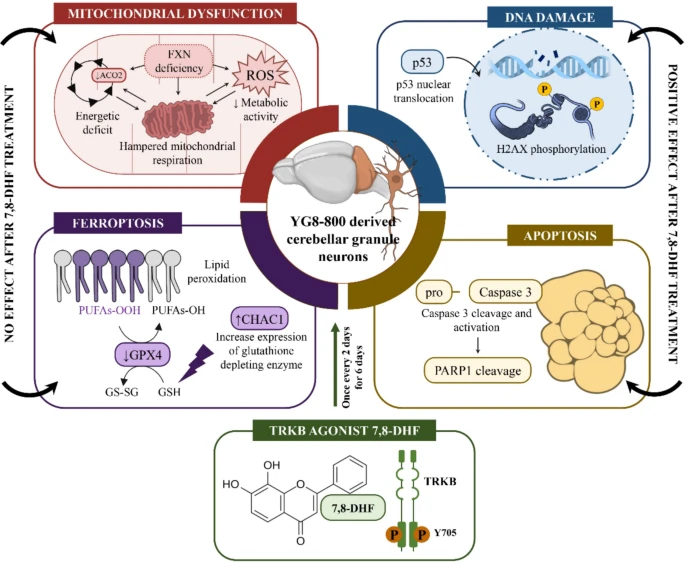
The TRKB Agonist 7,8-dihydroxyflavone Alleviates DNA Damage and Apoptosis in a Neuronal Cell Model of Friedreich’s Ataxia

Galán-Cruz, J., Vicente-Acosta, A., Loría, F. et al. The TRKB Agonist 7,8-dihydroxyflavone Alleviates DNA Damage and Apoptosis in a Neuronal Cell Model of Friedreich’s Ataxia. Mol Neurobiol 63, 580 (2026). doi:10.1007/s12035-026-05856-2 

We found evidence of mitochondrial dysfunction concomitant with DNA damage and enhanced cell death due to FXN deficiency in cultured neurons. The treatment with 7,8-DHF was able to reduce the markers of genotoxicity and apoptosis, without restoring the impaired mitochondrial function nor the total cell death, possibly through ferroptosis, revealing a partial neuroprotective effect insufficient to halt the neurodegenerative process in this in vitro model of FRDA.


Novel Precision Gene Therapy for Friedreich’s Ataxia with Dr. Gabriel Brooks Solid Biosciences

Apr 23, 2026 . Solid Biosciences
 Dr. Gabriel Brooks is Chief Medical Officer at Solid Biosciences, a precision molecular genetic medicines company focused on rare cardiovascular and neuromuscular diseases, including Friedreich's ataxia. Currently, there are very limited treatments for this rare, progressive neurologic disease caused by a genetic deficiency. Solid Biowsciences' novel gene therapy uses dual-route administration to deliver directly to the heart and brain and to replace the missing frataxin gene, which is critical for energy production.

Nomlabofusp Treatment Produces Frataxin Levels That Correlate Across Peripheral Tissues: Preclinical and Clinical Support for Surrogate Tissue Sampling

De Toni F, Hamdani M, Patadia C, Shankar G. Nomlabofusp Treatment Produces Frataxin Levels That Correlate Across Peripheral Tissues: Preclinical and Clinical Support for Surrogate Tissue Sampling. Clin Transl Sci. 2026 May;19(5):e70565. doi: 10.1111/cts.70565. PMID: 42033121; PMCID: PMC13109711. 

This study evaluated whether nomlabofusp‐derived hFXN concentrations covary across accessible peripheral matrices and FRDA‐relevant tissues, supporting the feasibility of surrogate tissue sampling to monitor drug‐derived hFXN exposure.

Wednesday, April 22, 2026

Targeting exercise, energy, or both in Friedreich's ataxia

Schulz J, Reetz K., Targeting exercise, energy, or both in Friedreich's ataxia,  The Lancet Neurology, 25, 435-437, doi:10.1016/S1474-4422(26)00129-8

Friedreich's ataxia is a progressive, multisystem disorder causing neurological disability along with musculoskeletal, metabolic, and cardiac involvement.1 A consistent feature is markedly reduced cardiopulmonary fitness, which matters clinically because peak aerobic capacity correlates with functional limitations and might affect long-term health risks. To address impaired cardiopulmonary function, a phase-2, single-site, randomised, 2 × 2 factorial trial tested whether an individualised, remotely supervised, home exercise programme, the NAD+ precursor nicotinamide riboside, or a combination thereof could improve cardiopulmonary fitness over 12 weeks in children and adults with Friedreich's ataxia.

Safety and efficacy of individualised exercise and NAD+ precursor supplementation in patients with Friedreich's ataxia in the USA: a single-centre, 2 × 2 factorial, randomised controlled trial

Lin K, Bucha A, McSweeney K et al. Safety and efficacy of individualised exercise and NAD+ precursor supplementation in patients with Friedreich's ataxia in the USA: a single-centre, 2 × 2 factorial, randomised controlled trial The Lancet Neurology, 25, 469-481. doi:10.1016/S1474-4422(26)00082-7 

 Friedreich's ataxia is a rare, chronic, progressive, neurodegenerative condition affecting multiple organ systems, including neurological, musculoskeletal, cardiac, and endocrine systems, and is marked by low cardiopulmonary fitness. We tested the effect of exercise and NAD+ precursor supplementation with nicotinamide riboside, which have each shown benefits in animal and early clinical studies, on cardiopulmonary fitness in individuals with Friedreich's ataxia.

Wednesday, April 15, 2026

From Genetic Mutation to Therapy in Friedreich Ataxia: Molecular Mechanisms, Therapeutic Advances, and Translational Challenges

Osaki, Y.; Haque, U. S.; Yokota, T. From Genetic Mutation to Therapy in Friedreich Ataxia: Molecular Mechanisms, Therapeutic Advances, and Translational Challenges. Preprints 2026, 2026041108. doi: 10.20944/preprints202604.1108.v1 

This review provides a comprehensive overview of the evolving therapeutic landscape in FRDA, highlighting mechanistic rationales, preclinical progress, clinical trial outcomes, and the key translational challenges that must be addressed to achieve durable disease modification.

Sunday, April 12, 2026

Longitudinal analysis shows GAA1 length and baseline clinical status as robust predictors of progression in Friedreich ataxia

Manrique L, Martínez-Dubarbie F, Pelayo-Negro AL, Benitez-Calle N, Sanchez-Pelaez MV, Cota-Gonzalez D, Loza R, Martinez-Díaz R, Irure-Ventura J, Sanchez-Quintana C, Sanchez I, Matilla-Dueñas A, Infante J. Longitudinal analysis shows GAA1 length and baseline clinical status as robust predictors of progression in Friedreich ataxia. J Neurol. 2026 Apr 9;273(5):259. doi: 10.1007/s00415-026-13812-2. PMID: 41954755; PMCID: PMC13065527.

Frataxin levels were significantly reduced in patients and correlated with GAA1 length and baseline severity. SARA, FARS–ADL, and INAS worsened significantly over time, while SCAFI and CCFS remained stable. GAA1 length and baseline SARA score emerged as the strongest predictors of progression. CSF NfL was elevated in younger patients and declined with age but did not correlate with severity or progression. These results support GAA1 length and baseline clinical status as robust predictors of progression and suggest limited utility of CSF NfL as a longitudinal biomarker particularly in later disease stages.

Friday, April 10, 2026

Hypomagnetic Fields Influence the Developmental Duration, Fecundity and Temperature Stress Resistance of Drosophila melanogaster via Frataxin-Associated Traits

Kang H, Wan G, Zhang J, Pan W. Hypomagnetic Fields Influence the Developmental Duration, Fecundity and Temperature Stress Resistance of Drosophila melanogaster via Frataxin-Associated Traits. Biology (Basel). 2026 Feb 27;15(5):391. doi: 10.3390/biology15050391. PMID: 41823819; PMCID: PMC12985338. 

 The impact of HMF on temperature stress resistance was particularly specific: it enhanced recovery from chill coma in control (GFP-RNAi) flies, while it accelerated recovery from heat shock in frataxin-silenced (fh-RNAi) flies. The mechanisms through which HMF modulate frataxin-associated phenotypes at a fundamental physical level warrant further investigation.

Arctigenin derivative (ARC-18) improved mitochondrial dysfunction and ameliorated frataxin deficiency symptoms via PGC-1α signaling

Gong Q, Han X, Liu T, Xiong B, Zhang B, Xie Y, Wan H, Ali T, Yang X, Li S. Arctigenin derivative (ARC-18) improved mitochondrial dysfunction and ameliorated frataxin deficiency symptoms via PGC-1α signaling. Genes Dis. 2025 Sep 1;13(4):101838. doi: 10.1016/j.gendis.2025.101838. PMID: 41884717; PMCID: PMC13011025.

Notably, co-treatment with the PGC-1α inhibitor SR-18292 abolished ARC-18 effects, confirming its dependence on PGC-1α activation to rescue mitochondrial deficits in FXN-deficient cells.

Thursday, March 26, 2026

Generation of Friedreich's ataxia induced pluripotent stem cells carrying the FXN c.165 + 5G>C splicing mutation

Yameogo P, Gerhart BJ, Sentmanat MF, Neilson A, Cui X, Verma M, Lynch DR, Napierala JS, Napierala M. Generation of Friedreich's ataxia induced pluripotent stem cells carrying the FXN c.165 + 5G>C splicing mutation. Stem Cell Res. 2026 Mar 16;93:103966. doi: 10.1016/j.scr.2026.103966. Epub ahead of print. PMID: 41865460. 

 Friedreich's ataxia (FRDA) is a multisystem, autosomal recessive disease caused by biallelic expansion of GAA repeats in intron 1 of the frataxin gene (FXN). While ∼96% of FRDA patients carry expanded GAA repeats on both FXN alleles, ∼4% are compound heterozygous with expanded GAA repeats on one allele and another mutation on the second allele. We generated induced pluripotent stem cells from blood lymphocytes from a FRDA patient carrying the FXN c.165 + 5G > C point mutation, which interferes with canonical splicing of intron 1 of the FXN gene. These cells allow for development of therapeutic approaches that target splicing defect in FRDA.

Deciphering the missing links between Friedreich ataxia and multiple sclerosis for targeted drug development

Kwa FAA, Anjomani-Virmouni S, Ramchunder Z, Kendal E, Xiao J. Deciphering the missing links between Friedreich ataxia and multiple sclerosis for targeted drug development. Drug Discov Today. 2026 Mar 16;31(3):104644. doi: 10.1016/j.drudis.2026.104644. Epub ahead of print. PMID: 41850598. 

 FA and MS appear to share some overlapping molecular mechanisms, including iron and lipid dysregulation, mitochondrial dysfunction, oxidative stress, and neuroinflammation. Recent research, including comparative transcriptomic analyses, offers valuable insights into shared disease pathways, with implications for potential biomarkers and therapeutic targets. In this review, we explore the shared pathological features and disease mechanisms in FA and MS, highlighting how delineating these shared pathways could inform early diagnostic strategies and support the development of targeted, mechanism-based interventions, including opportunities for drug repurposing.

Advancing a novel ASO therapy for Friedreich ataxia cardiomyopathy using a pre-clinical human vascularised cardiac organoid model

Jarmon G. Lees, Li Li, Haoxiang Zhang, Anne M. Kong, Andrew Treller, Geraldine M. Mitchell, Mirella Dottori, Alice Pebay, Stephen Wilcox, Mark Chong, Roger Peverill, Martin Delatyki, Jeffrey M. Pullin, Davis McCarthy, Jill S. Napierala, Marek Napierala, Shiang Y. Lim, Advancing a novel ASO therapy for Friedreich ataxia cardiomyopathy using a pre-clinical human vascularised cardiac organoid model, Journal of Molecular and Cellular Cardiology Plus, Volume 15, Supplement, 2026, 100527, ISSN 2772-9761, doi:10.1016/j.jmccpl.2025.100527. 

ASO-mediated knockdown of MEG3 reversed EC angiogenic dysfunction, limited SMC migration, reversed mitochondrial dysfunction, and prevented cardiac injury in a human vascularized cardiac organoid model. These findings suggest that MEG3 may be a promising novel therapy for treating cardiovascular disease in FA.

Fronto-Cerebellar Connectivity Disruptions and Functional Reorganization in Friedreich’s Ataxia: A Structural and Resting-State fMRI Study

Ravi Dadsena, Sandro Romanzetti, Stella Andrea Lischewski, Yingua Jing, Dagmar Timmann, Jennifer Faber, Jörg B. Schulz, Kathrin Reetz, Imis Dogan, Fronto-Cerebellar Connectivity Disruptions and Functional Reorganization in Friedreich’s Ataxia: A Structural and Resting-State fMRI Study, NeuroImage, 2026, 121872, ISSN 1053-8119, doi:10.1016/j.neuroimage.2026.121872.

While regional atrophy is known to be associated with symptoms, functional network alterations may represent a critical pathological mechanism; however, their specific contribution to motor and cognitive impairment remains unclear.

Advanced Heart Failure in Friedreich's Ataxia: A Story of Challenges, Opportunities, and Hope

Advanced Heart Failure in Friedreich's Ataxia: A Story of Challenges, Opportunities, and Hope. Satoshi Miyashita, Anthony Zaki, Kaitlin Schlabach, Gabriel Kim, Juliane K. Vierecke, David Lynch, Carmela Tan, Eileen Hsich, and Paulino Alvarez; JACC: Case Reports, 2026, 107391, ISSN 2666-0849, doi:10.1016/j.jaccas.2026.107391.

Heart failure is the leading cause of death in patients with FRDA. For those with high-risk features for adverse cardiovascular outcomes, careful monitoring of disease progression and early evaluation for advanced heart failure therapies are warranted.

Wednesday, March 25, 2026

Peripheral frataxin levels govern long-term clinical progression in Friedreich ataxia

Rummey C, Blair IA, Mesaros C, Rojsajjakul T, Dong Y, Wilmot G, et al. Peripheral frataxin levels govern long-term clinical progression in Friedreich ataxia. BMJ Neurology Open. 2026;8:e001561. doi:10.1136/bmjno-2026-001561 

 The present study demonstrates that frataxin levels directly correlate with all major clinical outcomes in FRDA, including not only cross-sectional markers such as AOO and disease severity, but also LoA as a disease milestone and long-term progression slopes of mFARS and USS. The associations were observed consistently across two independent cohorts and two distinct assay platforms, providing robust support for peripheral frataxin level as a clinically meaningful biomarker in both natural history studies and interventional trials.

Saturday, March 21, 2026

Friedreich ataxia transcriptomic dysregulation and identification of cell type-specific biomarkers: A systematic review and meta-analysis

Friedreich ataxia transcriptomic dysregulation and identification of cell type-specific biomarkers: A systematic review and meta-analysis Marnie L Maddock, Sara Miellet, Anjila Dongol, Amy J Hulme, Chloe K Kennedy, Louise A Corben, Rocio K Finol-Urdaneta, Alberto Nettel-Aguirre, Chiara Dionsi, Martin B Delatycki, Joel M Gottesfeld, Massimo Pandolfo, Elisabetta Soragni, Sanjay I Bidichandani, Jarmon G Lees, Shiang Y Lim, Jill S Napierala, Marek Napierala, Mirella Dottori bioRxiv 2026.03.18.712785; doi: 10.64898/2026.03.18.712785 

Together, these findings implicate cell type specific transcriptional programs as potential drivers of selective vulnerability and establish a framework for prioritising biomarkers in FRDA.

The multifaceted nature of Friedreich ataxia: strategies for comprehensive patient care.

Raza, M. L., Rawalia, M. A., Fatima, Z., & Zehra, H. (2026). The multifaceted nature of Friedreich ataxia: strategies for comprehensive patient care. Neurodegenerative Disease Management, 1–9. doi:10.1080/17582024.2026.2645501


Monday, March 16, 2026

Design Therapeutics Maps H2 Data Readouts for RESTORE-FA

MarketBeat. Sun, March 15, 2026. RESTORE-FA targets a demonstrable increase in endogenous frataxin (measured in mRNA and protein, including muscle biopsy) after 12 weeks of dosing, with topline data expected in the second half of the year. According to Shah, achieving that type of increase would be notable because it has “never been achieved before.” He said the company is measuring both frataxin mRNA and frataxin protein, describing mRNA as “completely endogenous” and specifying that the assay looks at “normal processed mRNA.” Measurements will be taken in whole blood cells and also in affected tissue via muscle biopsy, though he noted biopsy sampling is limited and would generally be conducted before and after dosing, with a possible third sample.

On the question of GeneTAC selectivity, Shah pointed to preclinical work across multiple FA patient-derived cell types. He said GeneTAC molecules increased endogenous frataxin RNA and led to downstream effects including normalization of protein levels and improvements in functions such as cis-aconitate and cellular respiration. He added that exposure of wild-type genotype cells to an FA GeneTAC molecule had no impact because the repeat number in the wild-type allele is short and therefore does not produce a functional consequence when treated.

Patient population and endpoints in the FA study Shah described RESTORE-FA enrollment criteria as “pretty permissive” beyond genetic confirmation of FA, including ambulatory and wheelchair-bound patients. He said the current study explores both IV and subcutaneous (sub-Q) administration to help determine dose route, dosing interval, and the frataxin response to inform future clinical investigation. While functional assessments are customary in FA trials and are being performed, he said the primary goal of the study is to look for a frataxin response.


Thursday, March 12, 2026

Biallelic Truncating DNAH14 Variant in Siblings with Neurodevelopmental Disorder and Predominant Ataxia: Clinical Report and Literature Review

Baris S, Dogan M, Terali K, Gezdirici A, Eroz R, Yucel PP, Kilic H, Yavas C, Yildirim G, Baris I. Biallelic Truncating DNAH14 Variant in Siblings with Neurodevelopmental Disorder and Predominant Ataxia: Clinical Report and Literature Review. Int J Mol Sci. 2026 Jan 6;27(2):575. doi: 10.3390/ijms27020575. PMID: 41596228; PMCID: PMC12841059.

The coexistence of FRDA expansions and a truncating DNAH14 variant suggests a potential dual genetic contribution to the observed phenotype, in which FRDA-associated pathology likely underlies the ataxia, while DNAH14 disruption may contribute to additional neurodevelopmental features. This is the first report describing the co-occurrence of FRDA and a homozygous truncating DNAH14 variant in the same individuals, broadening our understanding of overlapping neurogenetic mechanisms. Our findings expand the phenotypic spectrum of DNAH14-related disorders and highlight the importance of considering multilocus pathogenic variants in patients with complex or atypical ataxia presentations.

Hereditary Ataxias: From Pathogenesis and Clinical Features to Neuroimaging, Fluid, and Digital Biomarkers-A Scoping Review

Bernardi E, López-Lombardía Ó, Olmedo-Saura G, Pagonabarraga J, Kulisevsky J, Pérez-Pérez J. Hereditary Ataxias: From Pathogenesis and Clinical Features to Neuroimaging, Fluid, and Digital Biomarkers-A Scoping Review. Int J Mol Sci. 2026 Jan 15;27(2):881. doi: 10.3390/ijms27020881. PMID: 41596528; PMCID: PMC12841259.
We conducted a scoping review of PubMed and complementary sources (2010-2025) to map and describe the current landscape of genetic, imaging, fluid, electrophysiological, and digital biomarkers across the most prevalent hereditary ataxias, including SCA1, SCA2, SCA3, SCA6, SCA7, SCA17, SCA27B, dentatorubral-pallidoluysian atrophy (DRPLA), Friedreich's ataxia (FRDA), RFC1-related ataxia (CANVAS), SPG7, and fragile X-associated tremor/ataxia syndrome (FXTAS). 
 Mapping current approaches also reveals substantial variability and gaps across diseases and modalities, underscoring the need for harmonized validation in international multicenter cohorts and systematic integration into future clinical trials to advance precision medicine in hereditary ataxias.

Quantifying Placebo Effects in Hereditary Ataxia Trials: A Meta-Analysis of Scale for the Assessment and Rating of Ataxia (SARA) Score Changes

Petit E, Beaubois-Gandoin A, Durr A, du Montcel ST, Coarelli G. Quantifying Placebo Effects in Hereditary Ataxia Trials: A Meta-Analysis of Scale for the Assessment and Rating of Ataxia (SARA) Score Changes. Mov Disord. 2026 Jan 29. doi: 10.1002/mds.70151. Epub ahead of print. PMID: 41612637. 

 The analysis indicates a measurable placebo effect on SARA scores. Both intervention type and geographic region significantly influenced the strength of this effect, suggesting roles for patient expectations and cultural factors. Additionally, there was a trend toward reduction of placebo response as trial duration increased.

Wednesday, March 11, 2026

Pathological frataxin deficiency in mice causes tissue-specific alterations in iron homeostasis

Pazos-Gil M, Medina-Carbonero M, Sanz-Alcázar A, Portillo-Carrasquer M, Oliveira-Jorge L, Hernández G, Sánchez M, Delaspre F, Cabiscol E, Ros J, Tamarit J. Pathological frataxin deficiency in mice causes tissue-specific alterations in iron homeostasis. iScience. 2026 Jan 5;29(2):114625. doi: 10.1016/j.isci.2025.114625. PMID: 41623463; PMCID: PMC12857413.

In this study, we have analyzed iron homeostasis in a mouse model presenting pathological frataxin deficiency (FXNI151F). Our results reveal tissue-specific alterations of iron regulatory proteins (IRPs).

Friedreich-Ataxie: Die häufigste autosomal-rezessiv vererbte Ataxie [Friedreich's ataxia: The most common autosomal recessive inherited ataxia]

Erdlenbruch F. Friedreich-Ataxie: Die häufigste autosomal-rezessiv vererbte Ataxie [Friedreich's ataxia: The most common autosomal recessive inherited ataxia]. MMW Fortschr Med. 2026 Feb;168(Suppl 1):40-42. German. doi: 10.1007/s15006-026-5619-2. PMID: 41699226.

Die Friedreich-Ataxie ist eine seltene, autosomal-rezessiv vererbte, (neuro)degenerative Multisystemerkrankung. Neben dem Nervensystem sind auch das Herz, der Bewegungsapparat und der Stoffwechsel beeinträchtigt. Die Krankheit bricht i. d. R. im Jugendalter aus. …


Coexistence of Friedreich's Ataxia and Esophageal Cancer: A Case Report

Mehrban A, Babamahmoodi A, Hamidian MT, Amiri B, Ramzani P, Karimi M. Coexistence of Friedreich's Ataxia and Esophageal Cancer: A Case Report. Clin Case Rep. 2026 Feb 24;14(3):e72153. doi: 10.1002/ccr3.72153. PMID: 41756699; PMCID: PMC12932118.

Friedreich's ataxia (FA) is a rare autosomal recessive neurodegenerative disorder. Although FA is frequently associated with cardiomyopathy and diabetes mellitus, its coexistence with solid malignancies is exceptionally rare. To date, only a limited number of gastrointestinal cancers have been reported in patients with FA.

Therapeutic Potential of Deferiprone-Resveratrol Hybrid (DFP-RVT) Against Hepatic Iron Overload in β-Thalassemia Mice: A Proteomic Analysis

Maneekesorn S, Yingchutrakul Y, Simanon N, Kumsab J, Butkinaree C, Moonmuang S, Li J, Charoenkwan P, Koonyosying P, Paradee N, Srichairatanakool S, Chuljerm H. Therapeutic Potential of Deferiprone-Resveratrol Hybrid (DFP-RVT) Against Hepatic Iron Overload in β-Thalassemia Mice: A Proteomic Analysis. Biomolecules. 2026 Feb 23;16(2):338. doi: 10.3390/biom16020338. PMID: 41750406; PMCID: PMC12937802. 

Proteomic analysis was performed on liver tissues from baseline control, iron-overloaded, and DFP-RVT-treated mice to identify differentially expressed proteins and affected pathways. Iron overload resulted in marked downregulation of mitochondrial proteins, particularly components of oxidative phosphorylation and iron-sulfur cluster-associated pathways, including frataxin.

Our findings suggest that frataxin may be a key determinant of mitochondrial integrity and function in the context of hepatic iron overload. The observed frataxin loss in IO mice, likely driven by iron toxicity, contributes to hepatocellular damage. Importantly, DFP-RVT treatment restored frataxin expression, which may account for the recovery of mitochondrial protein levels and overall mitochondrial function

Dimethyl fumarate and mitochondrial physiology: implications for neurological disorders

de Oliveira MR. Dimethyl fumarate and mitochondrial physiology: implications for neurological disorders. Front Pharmacol. 2026 Feb 12;17:1748360. doi: 10.3389/fphar.2026.1748360. PMID: 41769702; PMCID: PMC12935978.

In conclusion, DMF exerts multifaceted and cell type-specific actions on mitochondria. Understanding these mechanisms may guide optimized therapeutic strategies and the identification of biomarkers for precision use in neurological disorders.

An Exploration of Vitamin D Deficiency and Clinical Status in Friedreich's Ataxia Patients in the UK

Fleszar Z, Thomas-Black G, Garcia-Moreno H, Cook A, Giunti P. An Exploration of Vitamin D Deficiency and Clinical Status in Friedreich's Ataxia Patients in the UK. Mov Disord Clin Pract. 2026 Mar 6. doi: 10.1002/mdc3.70529. Epub ahead of print. PMID: 41789678. 

Given the established benefits for bone health, particularly in a cohort in which falls are highly prevalent, coupled with the low cost and good safety profile of supplementation, we recommend that vitamin D deficiency should be screened for and actively managed in all FRDA patients.

Identification of Biological Subtypes of Friedreich Ataxia with Structural MRI-based Machine Learning

Pontillo G, Penna S, Arrigoni F, Bender B, Boesch S, Brunetti A, Cendes F, Chopra S, Corben LA, Deistung A, Delatycki MB, Diciotti S, Dogan I, Egan GF, França MC Jr, Georgiou-Karistianis N, Göricke SL, Henry PG, Hernandez-Castillo CR, Hutter D, Joers JM, Lenglet C, Lindig T, Lodi R, Manners DN, Martinez ARM, Martinuzzi A, Marzi C, Mascalchi M, Nachbauer W, Pane C, Peruzzo D, Pishardy PK, Reetz K, Rezende TJR, Romanzetti S, Saccà F, Schoels L, Schulz JB, Stefani A, Synofzik M, Thomopoulos SI, Thompson PM, Timmann D, Tonon C, Vavla M, Harding IH, Cocozza S. Identification of Biological Subtypes of Friedreich Ataxia with Structural MRI-based Machine Learning. Radiology. 2026 Mar;318(3):e251386. doi: 10.1148/radiol.251386. PMID: 41805414. 

Using the SuStaIn algorithm, three distinct structural MRI-based subtypes of FRDA were identified, with different patterns of brain degeneration and associations with clinical severity

Tuesday, March 10, 2026

22463 - MEJORÍA EN ESCALAS CLÍNICAS DE ATAXIA DE FRIEDREICH EN TRATAMIENTO CON OMAVELOXOLONA: A PROPÓSITO DE UN CASO

N. Rodríguez Albacete, A. Horga Hernández, A. Guerrero Sola, L. Galán Dávila,, 22463 - MEJORÍA EN ESCALAS CLÍNICAS DE ATAXIA DE FRIEDREICH EN TRATAMIENTO CON OMAVELOXOLONA: A PROPÓSITO DE UN CASO, Neurology Perspectives, Volume 5, Supplement 1, 2025, 111558, ISSN 2667-0496, doi:10.1016/S2667-0496(26)00777-5. 

En este caso, omaveloxolona se asoció a una mejoría clínica en escalas estandarizadas en una paciente con AF. Estos hallazgos contribuyen a incrementar la experiencia en práctica clínica real con este fármaco, aunque se requerirán mayor número de pacientes y seguimiento a largo plazo para confirmar estos resultados.

22211 - ANÁLISIS DE BIOMARCADORES PREDICTORES DE LA PROGRESIÓN EN LA ATAXIA DE FRIEDREICH (FRDA)

L. Manrique Arregui, F. Martínez Dubarbie, A. Pelayo Negro, N. Benítez Calle, M. Sánchez Peláez, D. Cota González, R. Martínez Díaz, I. Sánchez, A. Matilla, J. Infante Ceberio,, 22211 - ANÁLISIS DE BIOMARCADORES PREDICTORES DE LA PROGRESIÓN EN LA ATAXIA DE FRIEDREICH (FRDA), Neurology Perspectives, Volume 5, Supplement 1, 2025, 110789,ISSN 2667-0496, doi:10.1016/S2667-0496(26)00008-6.

Los pa4cientes con FDRA presentan mayores niveles de NfL en LCR y menor expresión de FXN. Aunque GAA1, DB y FXN se asociaron con la gravedad del fenotipo, GAA1 y SARA basal fueron los principales factores de progresión. Los NfL en LCR no se asociaron con la gravedad ni con la progresión clínica.

P602: FXN repeat-primed PCR and long-read sequencing reveal non-canonical repeat expansions,

P602: FXN repeat-primed PCR and long-read sequencing reveal non-canonical repeat expansions, Obadia, Benjamin et al. Genetics in Medicine Open, Volume 4, 104093; DOI: 10.1016/j.gimo.2026.104093 

This study validated the CE-based assay as an efficient and accurate screening method for detecting repeat expansions in FXN. PacBio sequencing revealed that GAA interruptions were present primarily in alleles below 200 repeats in our cohort. Identifying these interruptions may have significant clinical relevance; however, additional larger scale studies and an interpretation paradigm will be needed prior to incorporating interruption data into routine testing.

An exploration of barriers to diagnosis in Friedreich's ataxia

P270: An exploration of barriers to diagnosis in Friedreich's ataxia. Madden, Anna et al.; Genetics in Medicine Open, Volume 4, 103764. doi:10.1016/j.gimo.2026.103764 

Diagnostic delay remains common in FA, with an average delay of over four years between symptom onset and diagnosis. Misdiagnoses, clinician dismissal of symptoms, and genetic testing barriers remain the top three reported barriers among this patient population. These findings highlight key areas for improvement in both clinical recognition and appropriate genetic testing strategies in FA. Targeting efforts that increase awareness of FA signs, symptoms, and appropriate genetic testing with neurologists and geneticists, who are the most common diagnosing providers, may help to reduce diagnostic delay.

Economic Issues and Viability of Gene-Based Molecular Therapies for Cardiovascular Disease

Economic Issues and Viability of Gene-Based Molecular Therapies for Cardiovascular Disease; Hlávka, Jakub, Canadian Journal of Cardiology, Volume 0, Issue 0. doi:10.1016/j.cjca.2026.03.004 

The economic viability of cardiovascular GMTs will therefore hinge on whether their scientific potential can be translated into payment and evaluation frameworks that are compatible with health system budget constraints. This will require coordinated approaches that move beyond traditional single-payer decisions, including alternative payment models that better align upfront costs with verified, durable outcomes, and closer alignment between regulators, health technology assessment bodies, and payers on standards for long-term evidence generation. Without such coordination, particularly under stringent cost-effectiveness requirements applied to large cardiovascular populations, these therapies are likely to remain clinically promising yet economically difficult to integrate into routine care.

Nerve Ultrasound in Patients With Friedreich Ataxia

Kneer K, Stahl JH, Winter N, Wittlinger J, Männlin S, Gasimli T, Schöls L, Fleszar Z, Hayer S, Grimm A. Nerve Ultrasound in Patients With Friedreich Ataxia. Muscle Nerve. 2026 Mar;73(3):395-402. doi: 10.1002/mus.70091. Epub 2025 Dec 4. PMID: 41340583; PMCID: PMC12888831.

Peripheral nerve morphology in FRDA is variable and includes not only nerve enlargement but also nerve atrophy, thus reflecting complex segmental pathology beyond axonal degeneration.

Dual therapy with monoamine oxidase A inhibition and Nrf2 activation improves autonomic nervous system and cardiac function in a mouse model of Friedreich’s ataxia

BPS2026 – Dual therapy with monoamine oxidase A inhibition and Nrf2 activation improves autonomic nervous system and cardiac function in a mouse model of Friedreich’s ataxia. Figueroa, Francisco et al.; Biophysical Journal, Volume 125, Issue 4, 398a - 399a. doi:10.1016/j.bpj.2025.11.2441 

These findings identify SR-localized sympathetic signaling defects as a novel mechanism for arrhythmia in FA hearts. Dual targeting of MAO-A and Nrf2 provides complementary benefits, with clorgyline improving ANS and OMAV driving antioxidant defense, altogether restoring cardiac conduction and function.

Myo-inositol elevation as an in vivo marker of reactive gliosis in pediatric Friedreich Ataxia: evidence from HERMES-edited MR spectroscopy

William Gaetz, Muhammad G. Saleh, Charlotte Birnbaum, Luke Bloy, Timothy P.L. Roberts, David R. Lynch, Myo-inositol elevation as an in vivo marker of reactive gliosis in pediatric Friedreich Ataxia: evidence from HERMES-edited MR spectroscopy, NeuroImage: Clinical, 2026, 103983, ISSN 2213-1582, doi:10.1016/j.nicl.2026.103983. 

These findings support a model of early reactive gliosis in pediatric FRDA, indexed by elevated mI and occurring without statistically significant neuronal loss, (acknowledging that significant reductions in tNAA may require larger samples to resolve), and extend prior cerebellar-focused work to the primary motor cortex. While GSH and GABA + did not differ between groups, the observed mI elevations highlight myo-inositol as a practical in vivo biomarker of astrocytic activation and a candidate marker for disease progression in FRDA. Longitudinal studies are needed to confirm its sensitivity to clinical trajectory and therapeutic response.

The Scottish Medicines Consortium (SMC), which advises on newly licensed medicines for use by NHSScotland, has today (Monday, March 9) published advice on five medicines.

Published : March 09, 2026​. 

Omaveloxolone (Skyclarys®) was not recommended for the treatment of patients aged 16 years and older with Friedreich’s ataxia, a rare inherited condition that causes damage to the nervous system.

he committee was unable to accept omaveloxolone for the treatment of Friedreich’s ataxia. The company’s evidence around the cost effectiveness of the treatment was not sufficient.

Design Therapeutics Reports Fourth Quarter and Full Year 2025 Financial Results and Recent Business Updates

CARLSBAD, Calif., March 09, 2026 (GLOBE NEWSWIRE) -- Design Therapeutics, Inc. (Nasdaq: DSGN), a clinical-stage biotechnology company developing treatments for serious degenerative genetic diseases, today reported fourth quarter and full year 2025 financial results and highlighted business updates and upcoming milestones across its GeneTAC® portfolio. 

Friedreich Ataxia (FA): Design continues to dose FA patients in its RESTORE-FA Phase 1/2 MAD trial and anticipates providing an update on the effect of DT-216P2 on endogenous frataxin levels following 12 weeks of dosing in the second half of 2026.

Voyager Reports Fourth Quarter and Full Year 2025 Financial and Operating Results

March 09, 2026 16:01 ET | Source: Voyager Therapeutics, Inc.​. 

Neurocrine partnership update: Neurocrine has stated that, pending successful FDA IND clearance, it intends to initiate a clinical trial with NBIB-‘223 for Friedreich’s ataxia in H2 2026.

PLong-term use of omaveloxolone in patients with Friedreich ataxia: up to 5 years of natural history propensity score matching from the MOXIe OLE

234PLong-term use of omaveloxolone in patients with Friedreich ataxia: up to 5 years of natural history propensity score matching from the MOXIe OLE Nachbauer, W., D. Lynch et al. Neuromuscular Disorders, Volume 53, 106043 doi:10.1016/j.nmd.2025.106043 

 Updated safety analyses will also be presented. Continued analysis of the MOXIe OLE data informs on long-term efficacy and safety of omaveloxolone in patients with FA and provides relevant insights regarding disease progression in patients treated with omaveloxolone relative to the natural pattern of FA progression in the FACOMS cohort.

An Open-Label, Single Dose Study to Assess the Breast Milk Pharmacokinetics of Omaveloxolone in Healthy Lactating Women

MDA Clinic & Scientific Conference 2026. March 8 – 11, 2026​. Poster Number: 316 T. An Open-Label, Single Dose Study to Assess the Breast Milk Pharmacokinetics of Omaveloxolone in Healthy Lactating Women. Hamim Zahir, PhD, Biogen, Inc., Lucy Wu, PhD, Biogen, Inc., Susie Sinks, Biogen, Inc., Andre Arizpe, PharmD, Biogen, Inc., Sarah Chambers Gurson, Biogen, Inc., Konstantine Skordos, Biogen, Inc.

Objective: To determine the relative estimated infant exposure of omaveloxolone through breast milk following a single dose of 150 mg in healthy lactating women.

Conclusions: The results indicate that after oral administration of a single dose of 150 mg omaveloxolone, breast milk–fed infants may be exposed to a small fraction.(<1%) of the adult dose. The safety findings observed in this study are consistent with the known safety profile for omaveloxolone.

Diagnoses and Procedures Observed Prior to Friedreich Ataxia Diagnosis: A Real-World US Medical Claims Analysis

MDA Clinic & Scientific Conference 2026. March 8 – 11, 2026. Poster Number: 291 T. Diagnoses and Procedures Observed Prior to Friedreich Ataxia Diagnosis: A Real-World US Medical Claims Analysis. Alicia Henriquez, MD, Seattle Children's Hospital, Meredith Hatcher, Texas Movement Disorder Specialists, Georgetown, TX, USA, Sarah Doss, University of Nebraska Medical Center, Omaha, NE, USA, Partha S. Ghosh, MD, Boston Children's Hospital, Pravin Khemani, MD, Swedish Neuroscience Institute, Seattle, WA, USA, Sarah M. England, PhD, Biogen, Inc., Queeny Ip, Komodo Health, Xinshuo Ma, Komodo Health, Saila Chen, Komodo Health, Robin Avila, PhD, Biogen, Alexandra DiDonato, PharmD, Biogen. 

Objective: To characterize diagnoses and procedures received by patients prior to diagnosis of FA. 

Conclusions: Medical claims data enhance our understanding of the clinical journey of patients leading to FA diagnosis. Prior to FA diagnosis, patients encounter various healthcare professionals, receive a variety of diagnoses, and experience a multitude of procedures, which may lead to delayed time to definitive FA diagnosis. Expediting the diagnostic pathway for FA through timely referrals enables earlier intervention, which is imperative for reducing disease burden and enhancing patient quality of life.

High prevalence of pathogenic expanded composite repeats in Friedreich ataxia: Need for a more accurate diagnostic testing strategy

MDA Clinic & Scientific Conference 2026. March 8 – 11, 2026​. Poster Number: 295 T. High prevalence of pathogenic expanded composite repeats in Friedreich ataxia: Need for a more accurate diagnostic testing strategy. Sanjay Bidichandani, MBBS, PhD, University of Oklahoma, Morgan Devore, MS, University of Oklahoma, Christina Lam, BS, University of Oklahoma, David Lynch, MD, PhD, The Children’s Hospital of Philadelphia, Philadelphia, Pennsylvania, USA. High prevalence of pathogenic expanded composite repeats in Friedreich ataxia: Need for a more accurate diagnostic testing strategy. 
Objectives: To determine the true prevalence and variety of pathogenic composite alleles in FRDA by characterizing the precise sequence of the expanded alleles in a large prospective series of patients. To overcome the expense and unwieldy nature of whole genome longread sequencing by developing a robust, logistically-feasible, and cost-effective testing strategy to accurately detect and characterize these missing pathogenic alleles in FRDA.

US Medical Claims Database of Patients With Friedreich Ataxia Prescribed Omaveloxolone: Clinical Events From Diagnosis to Initiation of Treatment

MDA Clinic & Scientific Conference 2026. March 8 – 11, 2026. Poster Number: 296 T. US Medical Claims Database of Patients With Friedreich Ataxia Prescribed Omaveloxolone: Clinical Events From Diagnosis to Initiation of Treatment. Sheng-Han Kuo, PhD, Columbia University Medical Center, New York, NY, USA, Liana S. Rosenthal, MD, PhD, Johns Hopkins University School of Medicine, Boyang Bian, PhD, Biogen, Inc., Alexandra DiDonato, PharmD, Biogen, Sarah M. England, PhD, Biogen, Inc., Daniel Gomes, Voxanalytica, Nicholas D’Alberto, Biogen, Inc., James McKay, PhD, Biogen, Inc., Tony Wang, PhD, Voxanalytica, Robin Avila, PhD, Biogen. 

Objective: To describe clinical events and patient profiles in individuals with FA prior to omaveloxolone initiation using US medical claims.

Conclusions: These findings highlight that patients with FA experienced progressive worsening of symptoms, including bulbar, respiratory, and mobility impairments, between initial diagnosis and initiation of omaveloxolone. This underscores the importance of identifying decision points that should prompt earlier treatment intervention.

Long-Term Safety and Tolerability of Omaveloxolone in Patients With Friedreich Ataxia: Up to 6-Year Data From the MOXIe Open-Label Extension

MDA Clinic & Scientific Conference 2026. March 8 – 11, 2026​.Poster Number: 298 T. Long-Term Safety and Tolerability of Omaveloxolone in Patients With Friedreich Ataxia: Up to 6-Year Data From the MOXIe Open-Label Extension. Theresa Zesiewicz, MD, MD, University of South Florida Ataxia Research Center, Tampa, Florida, USA, Susan Perlman, MD, University of California, Los Angeles, Martin B. Delatycki, Victorian Clinical Genetics Services, Murdoch Children’s Research Institute, J. Chad Hoyle, Ohio State University College of Medicine, Sylvia Boesch, MD, Medical University of Innsbruck, Wolfgang Nachbauer, MD, PhD, Medical University of Innsbruck, Paola Giunti, MD, PhD, University College Hospital, George Wilmot, MD, PhD, Emory University School of Medicine, SH Subramony, MD, University of Florida Health, Katherine Mathews, MD, University of Iowa, Iowa City, Iowa, USA, Syed Farooq, Biogen International GmbH, Shobhana Natarajan, PhD, Biogen, Inc., Rose M. Domingo-Horne, MD, Biogen, Inc., Andre Arizpe, PharmD, Biogen, Inc., Jonathan Smith, MSc, Biogen Idec Ltd, Nicolas Folschweiller, Biogen, David Lynch, MD, PhD, The Children’s Hospital of Philadelphia, Philadelphia, Pennsylvania, USA. 

Objective: To evaluate the long-term safety and tolerability of omaveloxolone treatment in the MOXIe OLE.Conclusions: This updated analysis of the MOXIe OLE provides up to 6 years of continuous long-term safety and tolerability data regarding omaveloxolone use in patients with FA. 
Safety findings were consistent with the previously known safety profile.

Monday, March 9, 2026

Assessing Real-World Experiences on SKYCLARYS® (Omaveloxolone) (ARIES) in Patients With Friedreich Ataxia: An Observational Study

MDA Clinic & Scientific Conference 2026. March 8 – 11, 2026​. Poster Number: 292 T. Assessing Real-World Experiences on SKYCLARYS® (Omaveloxolone) (ARIES) in Patients With Friedreich Ataxia: An Observational Study. Elissa Hult, Biogen, Inc., Sarah M. England, PhD, Biogen, Inc., Boyang Bian, PhD, Biogen, Inc., James McKay, PhD, Biogen, Inc., Tami Sova, Biogen, Inc., Molly Scannell Bryan, PicnicHealth, Robin Avila, PhD, Biogen. 

Objective: To understand omaveloxolone treatment experience through PROs, the associated longitudinal clinical outcomes, and HCRU in the US real-world setting. 

Conclusions: This currently enrolling study will provide a means to longitudinally follow patients with FA treated with omaveloxolone in real-world clinical practice without the need for clinical sites. The findings will increase understanding of the real-world experience with omaveloxolone use in patients underrepresented in clinical trials and the impact on long-term patient experience and outcomes.

Interim Analysis of mFARS Trajectories Across 5 Years in the MOXIe Extension: Impact of Omaveloxolone Initiation Timing in Friedreich Ataxia

MDA Clinic & Scientific Conference 2026. March 8 – 11, 2026, Poster Number: 297 T. Interim Analysis of mFARS Trajectories Across 5 Years in the MOXIe Extension: Impact of Omaveloxolone Initiation Timing in Friedreich Ataxia. Theresa Zesiewicz, MD, MD, University of South Florida Ataxia Research Center, Tampa, Florida, USA, David Lynch, MD, PhD, The Children’s Hospital of Philadelphia, Philadelphia, Pennsylvania, USA, Claudia Yang Santos, PhD, Biogen, Inc., Susie Sinks, Biogen, Inc., Syed Farooq, Biogen International GmbH, Jonathan Smith, MSc, Biogen Idec Ltd, Shobhana Natarajan, PhD, Biogen, Inc., Nicolas Folschweiller, Biogen. 

Objective: Compare mFARS score trajectories between patients who initially received omaveloxolone in MOXIe Part 2 and patients who started omaveloxolone 1 year later in the OLE. 

Conclusions: The omaveloxolone-omaveloxolone group that started treatment 1 year before the placebo-omaveloxolone group showed numerically slower mFARS progression, relatively. Nevertheless, all patients receiving omaveloxolone experienced sustained benefit in slowing of mFARS decline throughout the analysis period.

Efficacy and Safety of a Novel Investigational AAV FXN Gene Therapy (SGT-212) for the Treatment of Friedreich’s Ataxia

MDA Clinic & Scientific Conference 2026. March 8 – 11, 2026​. Poster Number: 299 T. Efficacy and Safety of a Novel Investigational AAV FXN Gene Therapy (SGT-212) for the Treatment of Friedreich’s Ataxia. Matthew Harmelink, MD, Solid Biosciences, Brandon Chan, PhD, Solid Biosciences, Jun Lee, PhD, Solid Biosciences, Jessica Boehler, PhD, Solid Biosciences, Jamie Marshall, PhD, Solid Biosciences, Gourav Choudhury, PhD, DABT, Franklin Labs, Heather Born, PhD, GEMMA Biotherapeutics, Juliette Hordeaux, DVM, PhD, DECVP, GemmaBio, James Wilson, MD, PhD, GemmaBio, Jessie Hanrahan, PhD, Solid Biosciences, Gabriel Brooks, MD, Solid Biosciences, Nicholas Christoforou, PhD, Solid Biosciences. 

Approach: SGT-212, Solid Biosciences’ investigational AAV gene therapy for FA, expresses full-length, human FXN under a ubiquitous promoter. Preclinical evaluation of SGT-212 assessed neurologic and cardiac outcomes in conditional Fxn knockout mouse models targeting the nervous system (nKO) and heart (cKO). Long-term safety and biodistribution were assessed in non-human primates (NHPs) to support a first-in-human clinical trial using a dual route of administration via intraparenchymal dentate nucleus (IDN) and intravenous (IV) infusions. This multisystem, dual route approach was designed to target the neurologic, cardiac and systemic manifestations of FA.

Conclusions: These nonclinical studies demonstrate that a one-time administration of SGT-212 increases FXN expression in disease-relevant tissues, improves neurologic and cardiac phenotypes in mouse models, and is well tolerated in NHPs. Altogether, this positive, nonclinical data package supports the Phase 1b FALCON trial (NCT07180355), a first-in-human evaluation of SGT-212, which is actively screening participants.

Interim observations from a long-term open label study evaluating daily nomlabofusp administration in patients with Friedreich’s ataxia

MDA Clinic & Scientific Conference 2026. March 8 – 11, 2026. Poster Number: 419 O. Russell Clayton, DO, Larimar Therapeutics Inc., Erin Coyle, Larimar Therapeutics Inc., Flavia De Toni, PhD, Larimar Therapeutics Inc., Mohamed Hamdani, Larimar Therapeutics Inc. 

Objective: Evaluate interim observations related to FXN levels, clinical measures, and safety in patients with FA receiving long term administration of nomlabofusp. 
Conclusion: In patients with FA, daily administration of nomlabofusp for 6 months resulted in increased skin FXN to levels that were within the range expected in asymptomatic carriers with no phenotypic expression of disease. After 1 year of nomlabofusp treatment, values from clinical measures trended lower, suggesting a potential for clinical improvement in the context of increased FXN levels. There is a risk of anaphylaxis during early treatment, particularly in patients who had past exposure to nomlabofusp. Long term treatment with nomlabofusp appeared to be well tolerated.

Unmet Needs of Individuals With Friedreich Ataxia Cardiomyopathy: Insights From the Lexeo Friedreich Ataxia Cardiac Advisory Council

MDA Clinic & Scientific Conference 2026. March 8 – 11, 2026. Poster Number: 293 T. Cardiomyopathy: Insights From the Lexeo Friedreich Ataxia Cardiac Advisory Council. Joslyn Crowe, MSW, MA, Lexeo Therapeutics, Aly Bourbeau, Lexeo FA Cardiac Advisory Council, Marc Likins, Lexeo FA Cardiac Advisory Council, Amalia Maranhao, Lexeo FA Cardiac Advisory Council, Madelyn Raynsford, Lexeo FA Cardiac Advisory Council, Nilomi Shah, PharmD, Lexeo Therapeutics. 

 The FA Cardiac Advisory Council meeting aimed to understand crucial gaps and shared goals related to heart health, entry points in cardiac care and diagnostic challenges. A pre-meeting survey was completed by 10 council members. 

 Conclusions: The FA Cardiac Advisory Council identified key collaborative opportunities to increase knowledge around FA-CM and improve cardiac care by: sharing insights and stories on their lived experiences with FA-CM, developing materials to better inform newly diagnosed individuals with FA, building a community for those impacted by FA-CM via digital and social media channels, and providing on clinical trial experience.

Dexterity Outcomes in Friedreich Ataxia as Measured by mFARS and FA-ADL

MDA Clinic & Scientific Conference 2026. March 8 – 11, 2026. Poster Number: 294 T. Dexterity Outcomes in Friedreich Ataxia as Measured by mFARS and FA-ADL. Sheng-Han Kuo, PhD, Columbia University Medical Center, New York, NY, USA, Syed Farooq, Biogen International GmbH, Claudia Yang Santos, PhD, Biogen, Inc., Shobhana Natarajan, PhD, Biogen, Inc., Jonathan Smith, MSc, Biogen Idec Ltd, Richard Lawson, MSc, Biogen. 
Objective: To assess the impact of Friedreich ataxia (FA) on the activities of daily living associated with dexterity at different levels of disease severity.
Conclusions: Dexterity outcomes measured by FA-ADL have a strong association with mFARS score, suggesting that mFARS can also capture dexterity progression in FA.

Patient-reported experiences during long-term omaveloxolone treatment in Friedreich ataxia: survey design and planned qualitative analysis

MDA Clinic & Scientific Conference 2026. March 8 – 11, 2026. Patient-reported experiences during long-term omaveloxolone treatment in Friedreich ataxia: survey design and planned qualitative analysis. Susan Perlman, MD, University of California, Los Angeles, Theresa Zesiewicz, MD, MD, University of South Florida, Matthew Lafleur, MA, Bionews, Inc., Pensacola, FL, USA, Libby Schwers, BA, With Love, Libby, Des Moines, Iowa, USA, Jennifer Farmer, MS, Friedreich's Ataxia Research Alliance, Pearl WU, MS, Biogen, Claudia Yang Santos, PhD, Biogen, Inc., Kyle Fowler, MBiolSci, Syneos Health Consulting, Zurich, Switzerland, Fiona Thomas, MBChB, Syneos Health Consulting, London, UK, David Lynch, MD, PhD, The Children’s Hospital of Philadelphia, Philadelphia, Pennsylvania, USA. 

This qualitative survey will explore patient-reported lived experiences and perceptions of functional outcomes among adults (≥18 years) with Friedreich Ataxia (FA) receiving long-term omaveloxolone treatment in the United States.

Saturday, March 7, 2026

Health care, social, educational, and employment needs of individuals affected by rare diseases and their families in Catalonia, Spain

Calmaestra-Carrillo, E., Vernet, R., Torrent-Farnell, J. et al. Health care, social, educational, and employment needs of individuals affected by rare diseases and their families in Catalonia, Spain. Orphanet J Rare Dis (2026). doi:10.1186/s13023-026-04281-x 

This study aims to describe the perceived needs of individuals affected by rare diseases and their families, regarding healthcare, social, educational, and employment systems.

FDA reversals leave investors worrying about the fates of other experimental drugs

Published Fri, Mar 6 2026. The FDA in the past year has denied or discouraged applications of at least eight new drugs, according to RTW Investments. 
The agency initially refused to review Moderna’s flu shot before reversing course. Companies have accused the FDA of reversing previous guidance, leaving investors worried about the prospects for other drugs in the pipeline. 
FDA Commissioner Marty Makary and other leaders have publicly pledged flexibility for drugs treating rare diseases. Investors don’t feel like recent moves reflect that.

Thursday, February 26, 2026

Larimar Therapeutics Announces FDA Breakthrough Therapy Designation for Nomlabofusp in FA and Reiterates Planned BLA Submission in June 2026

BALA CYNWYD, Pa., Feb. 24, 2026 (GLOBE NEWSWIRE) -- Larimar Therapeutics, Inc. (Larimar) (Nasdaq: LRMR), a clinical-stage biotechnology company focused on developing treatments for complex rare diseases, today announced the U.S. Food and Drug Administration (FDA) has granted Breakthrough Therapy Designation (BTD) to nomlabofusp, a frataxin (FXN) protein replacement therapy with disease modifying potential, for the treatment of adults and children with Friedreich’s ataxia (FA).

Wednesday, February 18, 2026

Solid Biosciences Highlights FDA Path for SGT-003 DMD Study, Shares Early Friedreich’s Ataxia Update

Defense World Staff on Feb 17th, 2026

Friedreich’s ataxia: dual route administration and first patient dosed Turning to FA, Cumbo said the program uses a dual route of administration designed to reach the dentate nucleus of the cerebellum while also targeting the spinal column and heart. He described MRI-guided stereotactic delivery into both sides of the dentate nucleus, led by neurosurgeon Dr. Lonser at Ohio State University, followed by intravenous dosing after a rest period. 

Cumbo said Solid dosed its first FA patient, a 27-year-old who was “very, very sick,” and referenced an mFARS score of 93 (noting the patient had been in the high 80s). Roughly 40 days after dosing, he said the patient experienced a headache that resolved with Tylenol and that the company had not seen other issues. He added that the team was “already hearing things” suggestive of efficacy, but emphasized it did not yet have proof. 

For planned data disclosure, Cumbo said Solid expects to dose three to six FA patients over the course of the year and anticipates reading out results from the first three patients in the second half of the year, while continuing dosing in a second cohort. On expectations for clinical benefit, he cited 2.14 as the mFARS bar associated with the regulatory approval of SKYCLARYS.

Saturday, February 14, 2026

Targeting frataxin deficiency in DRG neurons and fibroblasts: omaveloxolone restores metabolic and iron balance to reduce ferroptosis

Portillo-Carrasquer M, Sanz-Alcázar A, Sánchez-López B, Delaspre F, Pazos-Gil M, Oliveira-Jorge L, Castells-Roca L, Tamarit J, Ros J, Cabiscol E. Targeting frataxin deficiency in DRG neurons and fibroblasts: omaveloxolone restores metabolic and iron balance to reduce ferroptosis. Biomed Pharmacother. 2026 Feb;195:119031. doi: 10.1016/j.biopha.2026.119031. Epub 2026 Jan 23. PMID: 41579709.

Here we used frataxin-deficient DRG neurons to better understand the drug's role in these sensory neurons. Omaveloxolone improved most of the analyzed parameters, including frataxin levels, cell survival, mitochondrial respiratory activity, iron homeostasis, oxidative stress, transferrin receptor 1 and glutathione peroxidase 4 levels, as well as the GSH/GSSG ratio.

Wednesday, February 11, 2026

Domain Specific Placebo Response in the Modified Friedreich's Ataxia Rating Scale

Rummey C, Farmer JM, Lynch DR. Domain Specific Placebo Response in the Modified Friedreich's Ataxia Rating Scale. Ann Clin Transl Neurol. 2026 Feb;13(2):393-398. doi: 10.1002/acn3.70239. Epub 2025 Nov 26. PMID: 41293985; PMCID: PMC12883693. 

The placebo response in clinical trials in ataxias complicates outcome interpretation and potentially obscures genuine treatment effects. We analyzed placebo group data from past trials in Friedreich Ataxia and observed notable responses in appendicular items, in contrast to minimal changes in axial function, as measured by respective subscores of the modified Friedreich Ataxia Rating Scale (mFARS). The effect increased with the number of consecutive tests, shorter testing intervals, and older group ages. This has implications for trial design and endpoint selection, thus strengthening the utility of the Upright Stability Score (USS), a sub‐score of mFARS, as an independent measure.

Sunday, February 8, 2026

Syndromic and Metabolic Cardiomyopathies: Rare Variants for Adults (Glycogen Storage Diseases, Friedreich’s Ataxia)

Turk Kardiyol Dern Ars 2024;52(Suppl 1):S1-S206. In Friedreich’s Ataxia patients, concentric left ventricular hypertrophy is common; asymmetric hypertrophy is very rare. Diastolic wall thickness is usually less than 15 mm, the ejection fraction is preserved, and outflow tract obstruction is typically absent.

Tuesday, February 3, 2026

Clinical manifestations of Friedreich ataxia in patient with neurofibromatosis seen at Daoud Charity Clinic Sudan: A case report

Abbasher Hussein, Mohajer Ismael, Mohamed Baraka, Abdaleliah Abobker, Wadah Altoom, Osama Suliman, Clinical manifestations of Friedreich ataxia in patient with neurofibromatosis seen at Daoud Charity Clinic Sudan: A case report, Journal of the Neurological Sciences, Volume 480, Supplement, 2025, 125530, ISSN 0022-510X, doi:10.1016/j.jns.2025.125530. 

 The case of Fredrich's ataxia and neurofibromatosis had been reported. Despite this, there was no clear association or overlapping relationship between the two diseases.

Mitochondrial iron overload is associated with lysosomal dysfunction-mediated mitophagy impairment in the heart of Friedreich’s ataxia

Eunbin Jee, Maisha Medha, Hwayoung Baek, Jonghan Kim, Yuho Kim, Mitochondrial iron overload is associated with lysosomal dysfunction-mediated mitophagy impairment in the heart of Friedreich’s ataxia, Mitochondrion, 2026, 102120, ISSN 1567-7249, doi:10.1016/j.mito.2026.102120. 

Collectively, our study provides mechanistic insight into the role of mitochondrial iron aggregates in the pathogenesis of FRDA-related cardiomyopathy and suggests a potential contribution of lysosomal dysfunction to impaired mitochondrial quality control in the context of cardiac frataxin deficiency.

Monday, February 2, 2026

La omaveloxolona recibe luz verde en España como primer tratamiento específico para la Ataxia de Friedreich

Comisión Interministerial de Precios de los Medicamentos 28 de enero de 2026. Skyclarys H* (omaveloxolona): Tratamiento de la ataxia de Friedreich en adultos y adolescentes a partir de los 16 años de edad.

Friday, January 30, 2026

Larimar’s Pediatric Friedreich’s Ataxia Trial Termination: What Investors Should Know

TipRanks Clinical-Trials-Jan 28, 2026 
"The study was first submitted in November 2024, signaling the formal start of the regulatory process for this pediatric program. The most recent update to the record was filed on January 26, 2026, showing that key information on the trial has been reviewed and refreshed. Notably, the trial status is listed as “terminated,” indicating that the study was stopped early and will not reach a planned primary or final completion date; reasons for termination are not detailed in the registry entry."

Wednesday, January 14, 2026

California grants $7.4 million to advance gene-edited stem cell therapy for Friedreich’ s ataxia

Gen 13, 2026. The California Institute for Regenerative Medicine (CIRM) has awarded $7.4 million to support a University of California San Diego team developing a first-of-its-kind stem cell-based gene therapy for Friedreich’s ataxia, a rare inherited neurodegenerative disease that causes progressive loss of coordination, muscle strength, heart function and overall mobility. The new funding will help the research team complete the final steps required by federal regulators before they can apply to begin a first-in-human clinical trial.

Orphan Drug Designation for SGT-212 Dual-Route Gene Therapy for the Treatment of Friedreich’s Ataxia

CHARLESTOWN, Mass., Jan. 12, 2026 (GLOBE NEWSWIRE) -- Solid Biosciences Inc. today announced that U.S. Food and Drug Administration (FDA) has granted Orphan Drug designation to SGT-212 for the treatment of Friedreich’s ataxia (FA). Additionally, earlier today, the Company reported that the first participant has been dosed in FALCON, a Phase 1b, first-in-human clinical trial evaluating SGT-212 for the treatment of FA.

Monday, January 12, 2026

Participant in First-in-Class Phase 1b FALCON Trial Evaluating SGT-212 Dual-Route Gene Therapy for the Treatment of Friedreich’s Ataxia

CHARLESTOWN, Mass., Jan. 12, 2026 (GLOBE NEWSWIRE) -- Solid Biosciences Inc. today announced that the first participant has been dosed in FALCON, the Company’s Phase 1b, first-in-human clinical trial evaluating SGT-212, its investigational gene therapy for the treatment of Friedreich’s ataxia (FA).
FALCON is a first-in-human, open-label, multi-center Phase 1b clinical trial designed to evaluate the safety and tolerability of SGT-212 in participants aged 18-40 who have been diagnosed with FA and cardiac hypertrophy. FALCON is being conducted in the United States.
SGT-212 is a recombinant AAV-based gene replacement therapy for Friedreich’s ataxia (FA) designed to deliver full-length human frataxin (FXN) via a dual route of administration: intradentate nucleus (IDN) infusion, using an FDA-approved neurosurgical device in a stereotactic, precision MRI-guided technique, followed by an intravenous (IV) infusion, with the intent to increase therapeutic FXN levels in the cerebellar dentate nuclei, cardiomyocytes and other systemic tissues. Targeted delivery to the dentate nuclei will be confirmed in real time via MRI. Restoration of FXN levels is expected to repair the underlying mitochondrial dysfunction in neurons and cardiomyocytes to address neurologic, cardiac and systemic manifestations of the disease.

Saturday, January 10, 2026

Biogen Advances New SKYCLARYS Formulation in Early Trial, Supporting Long-Term Rare Disease Strategy

TipRanks Clinical-Trials-Auto-Generated Newsdesk, Jan 09, 2026.
Study Overview This Phase 1 Biogen study, officially titled “A Phase 1, Randomized, Open-Label, Single-Dose, Crossover, Bioequivalence Study of Omaveloxolone Tablets for Oral Suspension Versus Capsules in Healthy Adult Participants,” aims to see whether a new tablet-for-suspension form of BIIB141 (omaveloxolone/SKYCLARYS) behaves in the body the same way as the current capsule. The focus is on how the drug is absorbed and processed in healthy adults, and on basic safety signals. The work matters because an easier-to-take form could broaden use in Friedreich’s ataxia and support longer-term revenue durability for Biogen. Study Design This is an interventional, Phase 1, randomized, open-label, two-period crossover study in healthy volunteers. All participants receive both forms of the drug in different orders, with a washout period between doses. There is no placebo and no blinding. The main purpose is treatment-focused bioequivalence: to compare how much drug gets into the bloodstream and how fast, and to confirm that both forms perform similarly while monitoring basic safety and tolerability.

Friday, January 9, 2026

Insights into DNA repeat expansions among 900,000 biobank participants

Hujoel, M.L.A., Handsaker, R.E., Tang, D. et al. Insights into DNA repeat expansions among 900,000 biobank participants. Nature (2026). doi:10.1038/s41586-025-09886-z 

 Expansions and contractions of tandem DNA repeats generate genetic variation in human populations and in human tissues. Some expanded repeats cause inherited disorders and some are also somatically unstable. Here we analysed DNA sequencing data from over 900,000 participants in the UK Biobank and the All of Us Research Program using computational approaches to recognize, measure and learn from DNA-repeat instability.

Thursday, January 8, 2026

Pathological frataxin deficiency in mice causes tissue-specific alterations in iron homeostasis

Pazos-Gil, M., Medina-Carbonero, M., Sanz-Alcázar, A., Portillo-Carrasquer,M., Oliveira-Jorge, L., Hernández, G., Sánchez, M., Delaspre, F., Cabiscol, E., Ros, J., Tamarit, J.,Pathological frataxin deficiency in mice causes tissue-specific alterations in iron homeostasis, iScience(2026), doi: doi:10.1016/j.isci.2025.11462 

Our results reveal tissue-specific alterations of Iron Regulatory Proteins. In the heart, IRP2 accumulation is observed, likely triggered by iron-sulfur deficiency, while IRP1 is decreased in the cerebellum and liver. We also found elevated iron levels in mutant mice. Accumulation was particularly pronounced in the cerebellum, where increases were already evident at 10 weeks. Hepatic accumulation was not manifested until 21 weeks and was more pronounced in females. Overall, these findings indicate that frataxin deficiency disrupts iron homeostasis in a tissue-, age-, and sex- dependent manner, and provide novel insights into the mechanisms causing these perturbations.

Wednesday, January 7, 2026

Microgliopathy as a primary mediator of neuronal death in models of Friedreich's Ataxia

Pernaci C, Johnson A, Gillette S, Warden AS, McCormick C, Weiser-Novak S, Ramirez G, Broersma EH, Mishra P, Sivakumar A, Cherqui S, Coufal NG. Microgliopathy as a primary mediator of neuronal death in models of Friedreich's Ataxia. Nat Commun. 2025 Nov 29;17(1):81. doi: 10.1038/s41467-025-66710-y. PMID: 41318543; PMCID: PMC12770375. 

 In a murine xenograft model, transplanted human FRDA microglia accumulate in white matter and the Purkinje cell layer, resulting in Purkinje neuron loss in otherwise healthy brains. Notably, CRISPR/Cas9-mediated correction of the GAA repeat reverses microglial defects and mitigates neurodegeneration. Here, we suggest that microglial dysfunction serve as a disease driver and a promising therapeutic target in FRDA.

Tuesday, January 6, 2026

Nanobodies as tools for studying human frataxin biology

Pignataro, M.F., Fernández, N.B., Garay-Alvarez, A. et al. Nanobodies as tools for studying human frataxin biology. Commun Biol (2026). doi:10.1038/s42003-025-09458-x 

As a whole, our results suggest that nanobodies can serve as binding partners for mitochondrial FXN. However, the specific effect of the nanobodies on the conformational stability of FRDA-related FXN variants in cells should be investigated.

Ataxia with hypertonia and absent deep tendon reflexes (DTRs)

Maddela, Chakradhar. (2026). Ataxia with hypertonia and absent deep tendon reflexes (DTRs) -DD. 10.13140/RG.2.2.12440.66562. 

It is an important localization clue-suggesting central cerebellar involvement with concomitant peripheral neuropathy or dorsal root involvement. Pathophysiologic Pattern • Ataxia → Cerebellar dysfunction • Hypertonia → Central (UMN / extrapyramidal) involvement • Absent DTRs → Peripheral neuropathy / dorsal root ganglion involvement Combined central + peripheral nervous system disease Common & Important Causes 1. Friedreich Ataxia (MOST COMMON) • Onset: 5-15 years • Progressive gait and limb ataxia • Absent DTRs (early) • Extensor plantar, increasing tone later • Sensory loss (proprioception, vibration) • Associated: cardiomyopathy, scoliosis, diabetes • Mechanism: Spinocerebellar + posterior column + peripheral nerve degeneration 2. Ataxia-Telangiectasia (Late Stage) • Early hypotonia → later rigidity / hypertonia • Peripheral neuropathy → absent reflexes • Oculocutaneous telangiectasia • Recurrent sinopulmonary infections • Raised AFP

Monday, January 5, 2026

Patient-reported, psychosocial and health economic outcomes in mild to moderate Friedreich's ataxia: baseline results of the PROFA study

Grobe-Einsler M, Borel S, Buchholz M, Sayah S, Hilab R, Pierron L, Iskandar A, Humphries B, Ewenczyk C, Heinzmann A, Atencio M, Feldmann K, Maas V, Faber J, Boesch S, Indelicato E, Reetz K, Schulz JB, Bischoff AT, Klopstock T, Schöls L, Minnerop M, Timmann D, Davies EH, Klockgether T, Durr A, Xie F, Michalowsky B. Patient-reported, psychosocial and health economic outcomes in mild to moderate Friedreich's ataxia: baseline results of the PROFA study. Lancet Reg Health Eur. 2025 Dec 11;61:101552. doi: 10.1016/j.lanepe.2025.101552. PMID: 41488489; PMCID: PMC12756708. 

One hundred one patients (mean [SD]: age 35.0 [11.5]; GAA-repeat size 657 [299]; 50.5% women) were included. Activities of daily living, HRQoL, communication disabilities, and informal care utilization worsened significantly across disability stages with moderate to high effect sizes. Cognitive-affective impairments and mental well-being showed significant associations with small effect sizes. Twenty-three patients (33.3%) received formal care, while 40 (58.0%) received informal care (mean 12.2 h/week). Omaveloxolone was used by 33 patients (32.7%). Annual healthcare costs excluding Omaveloxolone were €13,620 (payer) and €32,679 (societal perspective, including informal care and productivity losses).