Johanna C.W. Deenen, Pieter A. van Doorn, Catharina G. Faber, Anneke J. van der Kooi, Jan B.M. Kuks, Nicolette C. Notermans, Leo H. Visser, Corinne G.C. Horlings, Jan J.G.M. Verschuuren, André L.M. Verbeek, Baziel G.M. van Engelen, Neuromuscular Disorders, Available online 21 April 2016, ISSN 0960-8966, doi:10.1016/j.nmd.2016.04.011
Based on approximately eight years of data collection with the nationwide Computer Registry of All Myopathies and Polyneuropathies (CRAMP) in the Netherlands, recent epidemiologic information for thirty neuromuscular disorders is presented. Friedreich's Ataxia is included. These data may be helpful in the diagnostic process in clinical practice and trial readiness.
Saturday, May 21, 2016
Friday, May 20, 2016
Horizon Pharma plc to Acquire Worldwide Rights to Interferon Gamma-1b From Boehringer Ingelheim International GmbH
18 May 2016 | Marketwired.
"Obtaining worldwide rights for interferon gamma-1b solidifies our continued investment in the medicine, and pending the outcome of clinical studies investigating it in Friedreich's ataxia and advanced solid tumors, such as kidney and bladder cancer, strengthens our ability to expand its potential global use"

Under the terms of a separate agreement with an undisclosed third party, Horizon Pharma also licensed the U.S., European and Canadian intellectual property rights for interferon gamma-1b for the treatment of Friedreich's ataxia. Interferon gamma-1b is currently not indicated or approved for the treatment of Friedreich's ataxia.
"Obtaining worldwide rights for interferon gamma-1b solidifies our continued investment in the medicine, and pending the outcome of clinical studies investigating it in Friedreich's ataxia and advanced solid tumors, such as kidney and bladder cancer, strengthens our ability to expand its potential global use"

Under the terms of a separate agreement with an undisclosed third party, Horizon Pharma also licensed the U.S., European and Canadian intellectual property rights for interferon gamma-1b for the treatment of Friedreich's ataxia. Interferon gamma-1b is currently not indicated or approved for the treatment of Friedreich's ataxia.


Wednesday, May 18, 2016
Movimientos anormales y embarazo / Abnormal movements and pregnancy
Eduardo Palacios, Ángela Viviana Navas, Repertorio de Medicina y Cirugía, Available online 30 April 2016, ISSN 0121-7372, doi:10.1016/j.reper.2016.04.001.
OPEN ACCESS
Los estudios en este grupo de pacientes son escasos y antiguos dada la baja prevalencia.
Las mujeres con FA tienen una supervivencia más larga que los hombres, lo cual permite más años potenciales de maternidad durante las etapas avanzadas de la enfermedad. En la mayor serie, las complicaciones maternas más significativas fueron cardiacas y endocrinas; sin embargo, la capacidad para llevar a término el embarazo no fue afectada ni se presentaron malformaciones congénitas.
OPEN ACCESS
Los estudios en este grupo de pacientes son escasos y antiguos dada la baja prevalencia.
Las mujeres con FA tienen una supervivencia más larga que los hombres, lo cual permite más años potenciales de maternidad durante las etapas avanzadas de la enfermedad. En la mayor serie, las complicaciones maternas más significativas fueron cardiacas y endocrinas; sin embargo, la capacidad para llevar a término el embarazo no fue afectada ni se presentaron malformaciones congénitas.
Tuesday, May 17, 2016
Mitochondrial disorders in children: toward development of small‐molecule treatment strategies
Werner JH Koopman, Julien Beyrath, Cheuk‐Wing Fung, Saskia Koene, Richard J Rodenburg, Peter HGM Willems, Jan AM Smeitink. EMBO Molecular Medicine (2016) 8, 311-327, DOI 10.15252/emmm.201506131
Review
OPEN ACCESS
Review
OPEN ACCESS
Sunday, May 15, 2016
The Effect of Piracetam on Friedreich Ataxia.
Elmal AD , Gündüz A , Uzun N , Apaydn H , Kzltan G; Clinical Neuropharmacology [2016, 39(3):159-160] DOI: 10.1097/WNF.0000000000000148
Friday, May 13, 2016
Can other gene therapy developers avoid Glybera's fate?
FiercePharma, by Tracy Staton | May 4, 2016.
Glybera, the treatment for an ultra-rare disease called lipoprotein lipase deficiency approved back in 2012 in Europe, carries a price tag of $1 million.

GSK has said it won’t price its med anywhere close to $1 million. "We're trying to create a balance between nurturing innovation and creating value for the healthcare system,” spokeswoman Fiona McMillan told FiercePharma last month. “I know there are concerns about Europe's first gene therapy approval [Glybera] costing around $1 million, but I can say that Strimvelis will be significantly less than that.”
Glybera, the treatment for an ultra-rare disease called lipoprotein lipase deficiency approved back in 2012 in Europe, carries a price tag of $1 million.
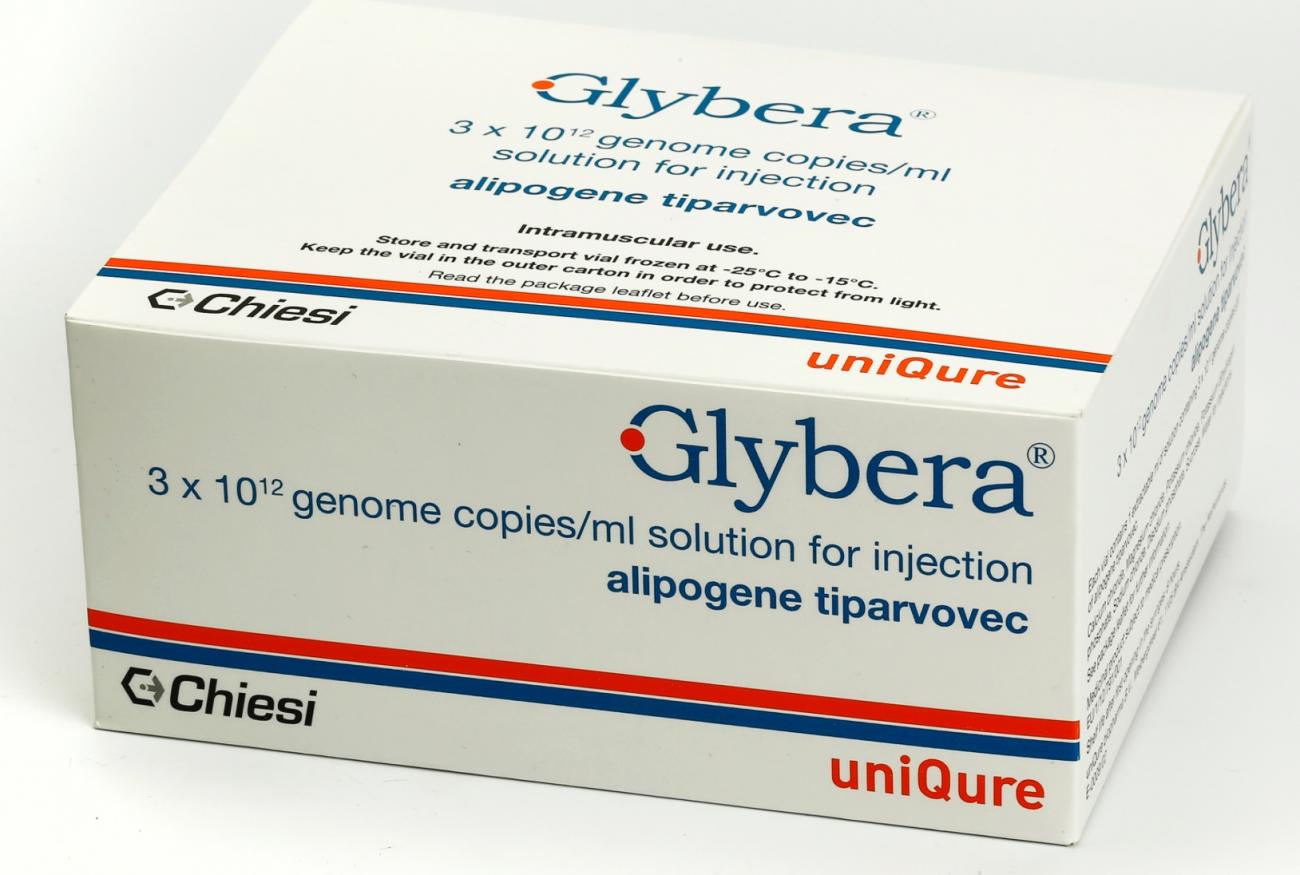
GSK has said it won’t price its med anywhere close to $1 million. "We're trying to create a balance between nurturing innovation and creating value for the healthcare system,” spokeswoman Fiona McMillan told FiercePharma last month. “I know there are concerns about Europe's first gene therapy approval [Glybera] costing around $1 million, but I can say that Strimvelis will be significantly less than that.”
Thursday, May 12, 2016
Responsible implementation of expanded carrier screening
Lidewij Henneman, Pascal Borry, Davit Chokoshvili, Martina C Cornel, Carla G van El, Francesca Forzano, Alison Hall, Heidi C Howard, Sandra Janssens, Hülya Kayserili, Phillis Lakeman, Anneke Lucassen, Sylvia A Metcalfe, Lovro Vidmar, Guido de Wert, Wybo J Dondorp and Borut Peterlin on behalf of the European Society of Human Genetics (ESHG), European Journal of Human Genetics (2016) 24, e1–e12; doi:10.1038/ejhg.2015.271; published online 16 March 2016
OPEN ACCESS
It is estimated that there are more than 1300 recessively inherited disorders (autosomal and X-linked), whose symptoms range from the very mild to severe, cumulatively affecting at least 30 in every 10000 children. This means that approximately 1–2 in 100 couples are couples who are at risk of having a child affected with a recessive genetic condition. Only a minority of carrier couples will be identified, since the majority of affected children are born to couples with no previous known family history, and only a minority of relatives in high-risk families request carrier testing.
OPEN ACCESS
It is estimated that there are more than 1300 recessively inherited disorders (autosomal and X-linked), whose symptoms range from the very mild to severe, cumulatively affecting at least 30 in every 10000 children. This means that approximately 1–2 in 100 couples are couples who are at risk of having a child affected with a recessive genetic condition. Only a minority of carrier couples will be identified, since the majority of affected children are born to couples with no previous known family history, and only a minority of relatives in high-risk families request carrier testing.
Wednesday, May 11, 2016
Advances in management of movement disorders in children
Anne Koy, Jean-Pierre Lin, Terence D Sanger, Warren A Marks, Jonathan W Mink, Lars Timmermann, The Lancet Neurology, Volume 15, Issue 7, June 2016, Pages 719-735, ISSN 1474-4422, doi:10.1016/S1474-4422(16)00132-0
Movement disorders in children are causally and clinically heterogeneous and present in a challenging developmental context. Treatment options are broad ranging, from pharmacotherapy to invasive neuromodulation and experimental gene and stem cell therapies.It is vital to transfer the expanding knowledge of the movement disorders into the development of novel symptomatic or, ideally, disease-modifying treatments, and to assess these therapeutic strategies in appropriately designed and well done trials.
Movement disorders in children are causally and clinically heterogeneous and present in a challenging developmental context. Treatment options are broad ranging, from pharmacotherapy to invasive neuromodulation and experimental gene and stem cell therapies.It is vital to transfer the expanding knowledge of the movement disorders into the development of novel symptomatic or, ideally, disease-modifying treatments, and to assess these therapeutic strategies in appropriately designed and well done trials.
Tuesday, May 10, 2016
Iron chelation in the treatment of neurodegenerative diseases.
Dusek P, Schneider SA, Aaseth J. J Trace Elem Med Biol. 2016 Mar 24. pii: S0946-672X(16)30047-5. doi: 10.1016/j.jtemb.2016.03.010.
Several studies examining effect of chelation therapy in Friedreich’s ataxia have been conducted. Higher doses of deferiprone seem to worsen neurologic symptoms in FRDA; lower doses might be beneficial in younger patients with less severe disease. However, more evidence is needed.
Several studies examining effect of chelation therapy in Friedreich’s ataxia have been conducted. Higher doses of deferiprone seem to worsen neurologic symptoms in FRDA; lower doses might be beneficial in younger patients with less severe disease. However, more evidence is needed.
Monday, May 9, 2016
Translation of Human-Induced Pluripotent Stem Cells: From Clinical Trial in a Dish to Precision Medicine
Nazish Sayed, Chun Liu, Joseph C. Wu, Journal of the American College of Cardiology, Volume 67, Issue 18, 10 May 2016, Pages 2161-2176, ISSN 0735-1097, doi:10.1016/j.jacc.2016.01.083.
Human-induced pluripotent stem cells (iPSCs) provide a new source of therapeutic cells free from the ethical issues or immune barriers of human embryonic stem cells. iPSC technology has expanded with 3 major applications: disease modeling, regenerative therapy, and drug discovery. Here we discuss, in a comprehensive manner, the recent advances in iPSC technology in relation to basic, clinical, and population health.
Human-induced pluripotent stem cells (iPSCs) provide a new source of therapeutic cells free from the ethical issues or immune barriers of human embryonic stem cells. iPSC technology has expanded with 3 major applications: disease modeling, regenerative therapy, and drug discovery. Here we discuss, in a comprehensive manner, the recent advances in iPSC technology in relation to basic, clinical, and population health.
Subscribe to:
Posts (Atom)

