Jupiter, Florida (PRWEB) May 25, 2016, by Christer Rosén, Jupiter Orphan Therapeutics.
Jupiter Orphan Therapeutics, Inc. (JOT) today announced that world renowned scientist David Sinclair, Ph.D. joined JOT as Co-Chairman of its Scientific Advisory Board (SAB).
Dr. Sinclair was contacted by his fellow scientists, Prof Martin Delatycki from Murdoch Childrens Research Institute, Australia (MCRI), who informed him of the resveratrol JOTROL product that was developed by JOT. JOT has a global license from MCRI regarding developing JOT101, a product for treatment of Friedreich’s ataxia.
Dr. Sinclair stated “I am excited about being able to work with JOT to bring drugs to patients who are waiting for a solution to their rare disease. JOTROL opens up the possibility that resveratrol will finally realize its potential to revolutionize human health.”
Thursday, May 26, 2016
Wednesday, May 25, 2016
Purkinje cell injury, structural plasticity and fusion in patients with Friedreich’s ataxia
Kevin C. Kemp, Amelia J. Cook, Juliana Redondo, Kathreena M. Kurian, Neil J. Scolding and Alastair Wilkins. Acta Neuropathologica CommunicationsNeuroscience of Disease20164:53. DOI: 10.1186/s40478-016-0326-3
For the first time in a genetic condition, we have also shown a disease-related increase in the frequency of Purkinje cell fusion and heterokaryon formation in Friedreich's ataxia cases; with evidence that underlying levels of cerebellar inflammation influence heterokaryon formation. Our results together further demonstrate the Purkinje cell’s unique plasticity and regenerative potential.

Understanding whether Purkinje cell axon remodelling and/or fusion represent mechanisms by which cerebellar functions can be maintained in genetic cerebellar disease has important therapeutic consequences. With the potential to protect and rescue neuronal cells and restore homeostatic balance during neurodegeneration, understanding the circumstances in which they occur may lead to techniques to manipulate these mechanisms therapeutically.
Open Access.
This article is distributed under the terms of the Creative Commons Attribution 4.0 International License (http://creativecommons.org/licenses/by/4.0/)
For the first time in a genetic condition, we have also shown a disease-related increase in the frequency of Purkinje cell fusion and heterokaryon formation in Friedreich's ataxia cases; with evidence that underlying levels of cerebellar inflammation influence heterokaryon formation. Our results together further demonstrate the Purkinje cell’s unique plasticity and regenerative potential.
Understanding whether Purkinje cell axon remodelling and/or fusion represent mechanisms by which cerebellar functions can be maintained in genetic cerebellar disease has important therapeutic consequences. With the potential to protect and rescue neuronal cells and restore homeostatic balance during neurodegeneration, understanding the circumstances in which they occur may lead to techniques to manipulate these mechanisms therapeutically.
Open Access.
This article is distributed under the terms of the Creative Commons Attribution 4.0 International License (http://creativecommons.org/licenses/by/4.0/)


Tuesday, May 24, 2016
Longitudinal strain bull's eye plot patterns in patients with cardiomyopathy and concentric left ventricular hypertrophy.
Dan Liu, Kai Hu, Peter Nordbeck, Georg Ertl, Stefan Störk and Frank Weidemann. European Journal of Medical Research 201621:21 DOI: 10.1186/s40001-016-0216-y
Friedreich’s ataxia: Besides the neurologic manifestation, cardiac involvement and endocrine involvement are also frequent. A concentric LVH with an end-diastolic wall thickness of less than 15 mm is the usual echocardiographic feature. Around 40 % of FA patients show concentric remodeling, 35 % show concentric hypertrophy and only 5 % display an eccentric hypertrophy. Global systolic function and diastolic function remain normal in most FA patients, and only end-stage FA patients develop reduced EF with global hypokinesia and slightly dilated LV chamber.
 Electrocardiographic abnormalities (ST-T changes) are often the earliest sign of FA cardiomyopathy. At this early stage, echocardiography results are usually normal and the longitudinal strain bull’s eye plot is similar pattern as healthy subjects (Fig. 7a). In FA patients with concentric LVH and normal EF, the bull’s eye plot pattern presents with a mildly reduced average global strain (Fig. 7b). Myocardial fibrosis develops gradually, leading to LV wall thinning and LV dilatation during the disease progression, while EF remains preserved for a long time until the end-stage of the disease. Of note, the LV wall thinning appears to be diffuse in FA cardiomyopathy, which is different from the typical findings in Fabry cardiomyopathy. The bull’s eye plot shows significantly reduced average global longitudinal strain when LVEF is reduced (Fig. 7c).
CMRI with LE imaging provides evidence of fibrosis in the advanced stage of this disease, suggesting that fibrosis might be associated with subsequent myocardial dysfunction.
Open Access
This article is distributed under the terms of the Creative Commons Attribution 4.0 International License (http://creativecommons.org/licenses/by/4.0/)
Friedreich’s ataxia: Besides the neurologic manifestation, cardiac involvement and endocrine involvement are also frequent. A concentric LVH with an end-diastolic wall thickness of less than 15 mm is the usual echocardiographic feature. Around 40 % of FA patients show concentric remodeling, 35 % show concentric hypertrophy and only 5 % display an eccentric hypertrophy. Global systolic function and diastolic function remain normal in most FA patients, and only end-stage FA patients develop reduced EF with global hypokinesia and slightly dilated LV chamber.
CMRI with LE imaging provides evidence of fibrosis in the advanced stage of this disease, suggesting that fibrosis might be associated with subsequent myocardial dysfunction.
Open Access
This article is distributed under the terms of the Creative Commons Attribution 4.0 International License (http://creativecommons.org/licenses/by/4.0/)
Sunday, May 22, 2016
Role of XPD in cellular functions: to TFIIH and beyond
Bennett Van Houten, Jochen Kuper, Caroline Kisker, DNA Repair, Available online 16 May 2016, ISSN 1568-7864, doi: 10.1016/j.dnarep.2016.05.019.
One interesting implication of this work is in cells deficient in iron-sulfur cluster biogenesis, such as those from patients with Friedreich ataxia (FA), since several key DNA processing proteins, such as XPD, DDX11, FANCJ and RTEL1 contain FeS centers, these patients displayed an RNA expression pattern similar to cells undergoing a DNA damage respons. FA patients might be expected to have higher levels of DNA damage. It has recently been observed that these patients have altered telomeres because RTEL1 activity is lower.
One interesting implication of this work is in cells deficient in iron-sulfur cluster biogenesis, such as those from patients with Friedreich ataxia (FA), since several key DNA processing proteins, such as XPD, DDX11, FANCJ and RTEL1 contain FeS centers, these patients displayed an RNA expression pattern similar to cells undergoing a DNA damage respons. FA patients might be expected to have higher levels of DNA damage. It has recently been observed that these patients have altered telomeres because RTEL1 activity is lower.
Saturday, May 21, 2016
The epidemiology of neuromuscular disorders: Age at onset and gender in the Netherlands
Johanna C.W. Deenen, Pieter A. van Doorn, Catharina G. Faber, Anneke J. van der Kooi, Jan B.M. Kuks, Nicolette C. Notermans, Leo H. Visser, Corinne G.C. Horlings, Jan J.G.M. Verschuuren, André L.M. Verbeek, Baziel G.M. van Engelen, Neuromuscular Disorders, Available online 21 April 2016, ISSN 0960-8966, doi:10.1016/j.nmd.2016.04.011
Based on approximately eight years of data collection with the nationwide Computer Registry of All Myopathies and Polyneuropathies (CRAMP) in the Netherlands, recent epidemiologic information for thirty neuromuscular disorders is presented. Friedreich's Ataxia is included. These data may be helpful in the diagnostic process in clinical practice and trial readiness.
Based on approximately eight years of data collection with the nationwide Computer Registry of All Myopathies and Polyneuropathies (CRAMP) in the Netherlands, recent epidemiologic information for thirty neuromuscular disorders is presented. Friedreich's Ataxia is included. These data may be helpful in the diagnostic process in clinical practice and trial readiness.
Friday, May 20, 2016
Horizon Pharma plc to Acquire Worldwide Rights to Interferon Gamma-1b From Boehringer Ingelheim International GmbH
18 May 2016 | Marketwired.
"Obtaining worldwide rights for interferon gamma-1b solidifies our continued investment in the medicine, and pending the outcome of clinical studies investigating it in Friedreich's ataxia and advanced solid tumors, such as kidney and bladder cancer, strengthens our ability to expand its potential global use"

Under the terms of a separate agreement with an undisclosed third party, Horizon Pharma also licensed the U.S., European and Canadian intellectual property rights for interferon gamma-1b for the treatment of Friedreich's ataxia. Interferon gamma-1b is currently not indicated or approved for the treatment of Friedreich's ataxia.
"Obtaining worldwide rights for interferon gamma-1b solidifies our continued investment in the medicine, and pending the outcome of clinical studies investigating it in Friedreich's ataxia and advanced solid tumors, such as kidney and bladder cancer, strengthens our ability to expand its potential global use"

Under the terms of a separate agreement with an undisclosed third party, Horizon Pharma also licensed the U.S., European and Canadian intellectual property rights for interferon gamma-1b for the treatment of Friedreich's ataxia. Interferon gamma-1b is currently not indicated or approved for the treatment of Friedreich's ataxia.
Wednesday, May 18, 2016
Movimientos anormales y embarazo / Abnormal movements and pregnancy
Eduardo Palacios, Ángela Viviana Navas, Repertorio de Medicina y Cirugía, Available online 30 April 2016, ISSN 0121-7372, doi:10.1016/j.reper.2016.04.001.
OPEN ACCESS
Los estudios en este grupo de pacientes son escasos y antiguos dada la baja prevalencia.
Las mujeres con FA tienen una supervivencia más larga que los hombres, lo cual permite más años potenciales de maternidad durante las etapas avanzadas de la enfermedad. En la mayor serie, las complicaciones maternas más significativas fueron cardiacas y endocrinas; sin embargo, la capacidad para llevar a término el embarazo no fue afectada ni se presentaron malformaciones congénitas.
OPEN ACCESS
Los estudios en este grupo de pacientes son escasos y antiguos dada la baja prevalencia.
Las mujeres con FA tienen una supervivencia más larga que los hombres, lo cual permite más años potenciales de maternidad durante las etapas avanzadas de la enfermedad. En la mayor serie, las complicaciones maternas más significativas fueron cardiacas y endocrinas; sin embargo, la capacidad para llevar a término el embarazo no fue afectada ni se presentaron malformaciones congénitas.
Tuesday, May 17, 2016
Mitochondrial disorders in children: toward development of small‐molecule treatment strategies
Werner JH Koopman, Julien Beyrath, Cheuk‐Wing Fung, Saskia Koene, Richard J Rodenburg, Peter HGM Willems, Jan AM Smeitink. EMBO Molecular Medicine (2016) 8, 311-327, DOI 10.15252/emmm.201506131
Review
OPEN ACCESS
Review
OPEN ACCESS
Sunday, May 15, 2016
The Effect of Piracetam on Friedreich Ataxia.
Elmal AD , Gündüz A , Uzun N , Apaydn H , Kzltan G; Clinical Neuropharmacology [2016, 39(3):159-160] DOI: 10.1097/WNF.0000000000000148
Friday, May 13, 2016
Can other gene therapy developers avoid Glybera's fate?
FiercePharma, by Tracy Staton | May 4, 2016.
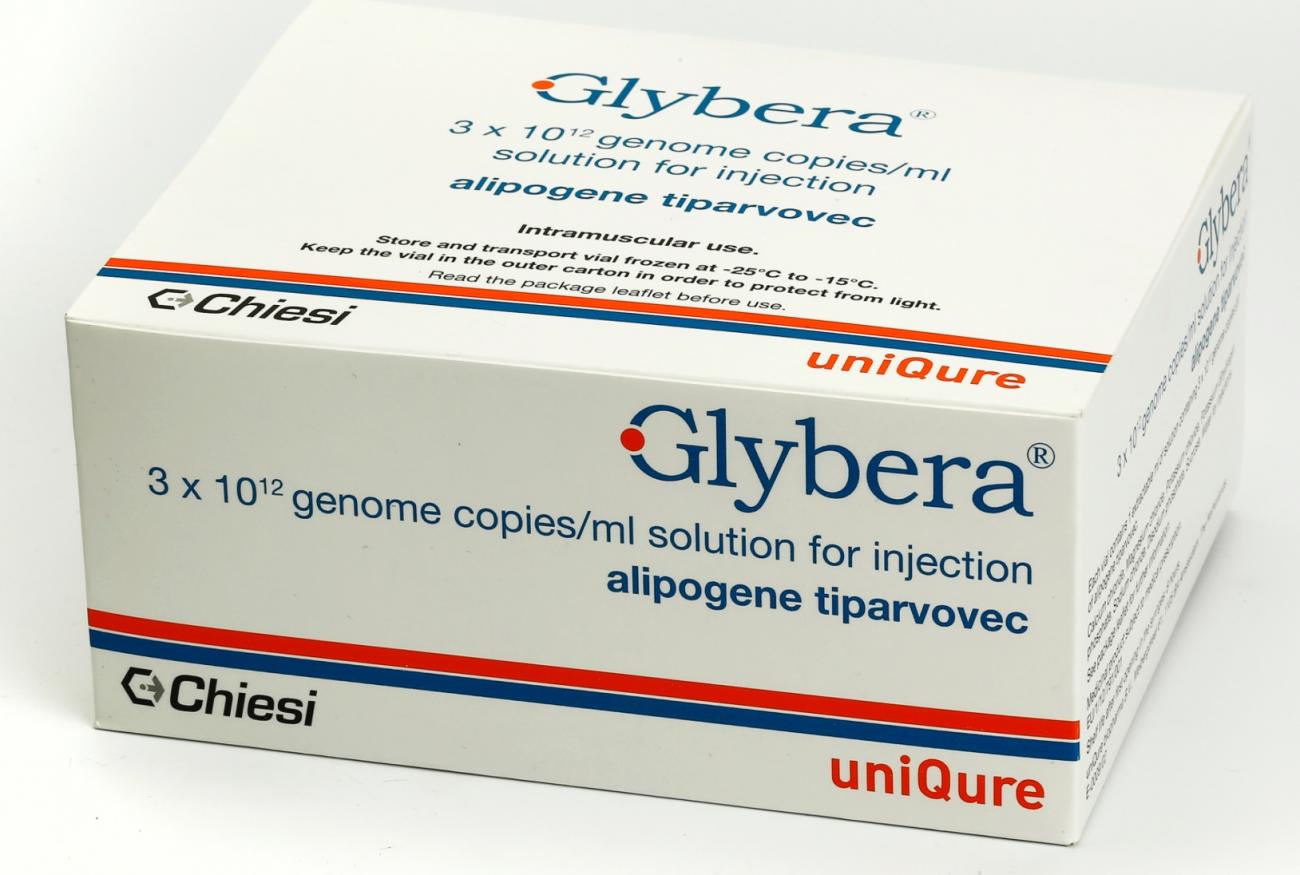
Glybera, the treatment for an ultra-rare disease called lipoprotein lipase deficiency approved back in 2012 in Europe, carries a price tag of $1 million.

GSK has said it won’t price its med anywhere close to $1 million. "We're trying to create a balance between nurturing innovation and creating value for the healthcare system,” spokeswoman Fiona McMillan told FiercePharma last month. “I know there are concerns about Europe's first gene therapy approval [Glybera] costing around $1 million, but I can say that Strimvelis will be significantly less than that.”
Glybera, the treatment for an ultra-rare disease called lipoprotein lipase deficiency approved back in 2012 in Europe, carries a price tag of $1 million.
GSK has said it won’t price its med anywhere close to $1 million. "We're trying to create a balance between nurturing innovation and creating value for the healthcare system,” spokeswoman Fiona McMillan told FiercePharma last month. “I know there are concerns about Europe's first gene therapy approval [Glybera] costing around $1 million, but I can say that Strimvelis will be significantly less than that.”
Subscribe to:
Posts (Atom)

