Friday, January 8, 2021
Current report, slide presentation, Form 8-K Exicure, Inc.
Form 8-K Exicure, Inc. Current report, items 7.01 and 9.01; Published: 2021-01-07
On January 7, 2021, Exicure, Inc. (the “Company”) will host a virtual R&D Day on Thursday, January 7, 2021 from 9:00 am to 10:30 am ET to discuss its neuroscience pipeline, including its lead program for Friedreich’s Ataxia (FA). The R&D Day webcast will include a slide presentation, which is attached as Exhibit 99.1 to this Current Report on Form 8-K and incorporated by reference in this Item 7.01. The R&D Day webcast will be available on the Company’s website for 30 days following the event.


LEXEO Therapeutics Launches with $85 Million Series A Financing to Develop Gene Therapies for Rare and Non-Rare Monogenic Diseases
NEW YORK, Jan. 07, 2021 (GLOBE NEWSWIRE) -- LEXEO Therapeutics, a clinical-stage gene therapy company, debuted today with an oversubscribed $85 million Series A financing, led by Longitude Capital and Omega Funds, and joined by Lundbeckfonden Ventures, PBM Capital, Janus Henderson Investors, Invus, Woodline Partners LP, the Alzheimer’s Drug Discovery Foundationi and Alexandria Venture Investments. Proceeds from the financing will help advance the company’s three lead investigational programs, including: LX2006, an IV-administered therapy for cardiomyopathy associated with Friedreich’s ataxia (Phase 1 start planned for 2021); LX1004, a CNS-administered therapy for CLN2 Batten disease (Phase 1/2 completed); and LX1001, a CNS-administered therapy for APOE4-associated Alzheimer’s disease (Phase 1 ongoing).
Wednesday, January 6, 2021
Developing an Instrumented Measure of Upper Limb Function in Friedreich Ataxia
Louise A. Corben, Khoa D. Nguyen, Pubudu N. Pathirana, Malcolm K. Horne, David J. Szmulewicz, Melissa Roberts & Martin B. Delatycki; Cerebellum (2021). doi:10.1007/s12311-020-01228-1
We have developed an objective measure, the Ataxia Instrumented Measure–Spoon (AIM-S), which consists of a spoon equipped with a BioKin wireless motion capture device, and algorithms that analyse these signals, to measure ataxia of the upper limb during the pre-oral phase of eating. The aim of this study was to evaluate the AIM-S as a sensitive and functionally relevant clinical outcome for use in clinical trials.
Tuesday, January 5, 2021
Two ways to control CjCas9 expression in the deletion of pathogenic GAA repeat in frataxin gene
Pouiré Yaméogo; Genetic Engineering Research, Vol.9 Iss.3:sc165
Our results showed that despite the self-destruction of the CjCas9 gene, an effective genome editing of the FXN gene was obtained in vitro. CRISPR-SCReT (Stop Codon Read Through), we inserted a stop codon (TGA) at the beginning of the CjCas9 gene to repress its expression. Subsequently, we induced the expression of Cas9 by molecules capable to allow translation despite the presence of the premature stop codon.
Thursday, December 31, 2020
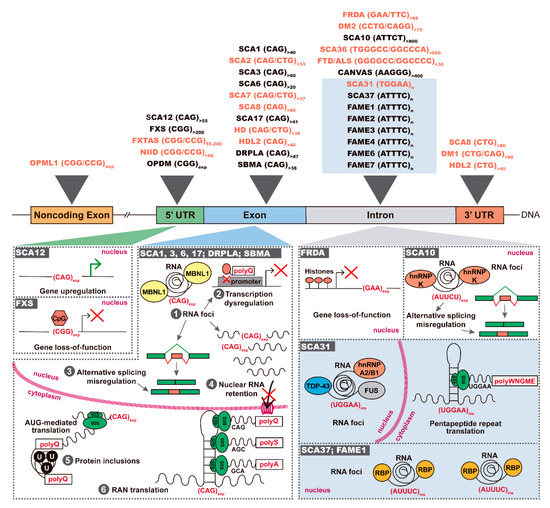
Antisense Transcription across Nucleotide Repeat Expansions in Neurodegenerative and Neuromuscular Diseases: Progress and Mysteries
Castro AF, Loureiro JR, Bessa J, Silveira I. Genes. 2020 Nov;11(12). DOI: 10.3390/genes11121418.
Efficacy and Tolerability of Interferon Gamma in Treatment of Friedreich's Ataxia: Retrospective Study
Mehmet Fatih YETKİN and Murat GÜLTEKİN; Noro Psikiyatr Ars. 2020 Sep 21;57(4):270-273. doi: 10.29399/npa.25047. eCollection 2020 Dec.
Interferon-gamma (IFN-γ) has been shown to induce frataxin production in many cell types. In this study, the clinical features, tolerability, and the prognosis of individuals with FRDA to whom IFN-γ was administered in a university hospital were evaluated retrospectively and the results were discussed. To the best of our knowledge, this is the first study conducted in our country to evaluate the effect of IFN gamma on this patient group.
Saturday, December 26, 2020
FDA requests new trial for Reata's Friedreich's ataxia program; J&J's Tremfya picks up expanded label in Europe
Endpoints News, November 25, 2020. Three months after Reata Pharmaceuticals suggested its Friedreich’s ataxia program omaveloxolone could be delayed, the company revealed that is indeed going to be the case.
The FDA did not rule out reconsidering omaveloxolone’s application once the new study has been completed, Reata noted.
Thursday, December 24, 2020
PTC Therapeutics announced the initiation of its third study of 2020 investigating vatiquinone.
NeurologyLive, December 24, 2020
The double-blind MOVE-FA trial will evaluate vatiquinone versus placebo in approximately 110 children and young adults with FA in parallel arms over 18 months. Patients will be enrolled from the US, EU, Australia, and Latin America.
A Study to Assess the Efficacy and Safety of Vatiquinone for the Treatment of Participants With Friedreich Ataxia (MOVE-FA)
ClinicalTrials.gov Identifier: NCT04577352; December 19, 2020
Sponsors and Collaborators PTC Therapeutics
Double-blind, placebo-controlled phase, participants will be stratified by baseline mFARS score (<40 age="" and="" at="" disease="" of="" onset="" or="" screening="" versus="" years="">21 years) and randomized to receive either vatiquinone or placebo using interactive web response system (IWRS). Following completion of the randomized, double-blind, placebo-controlled phase (72 weeks), participants will enter into an open-label extension phase (24 weeks) during which they will receive open-label treatment with vatiquinone at the dose they received in the randomized phase of the study (for participants entering the extension phase who initially received placebo, the dose of vatiquinone will be determined based on age and weight) and then a safety follow-up (10-30 days after last dose).
Insights Into the Roles of the Sideroflexins / SLC56 Family in Iron Homeostasis and Iron-Sulfur Biogenesis
Tifoun, N.; De las Heras, J.M.; Guillaume, A.; Bouleau, S.; Mignotte, B.; Le Floch, N.; Preprints 2020, 2020120583 doi: 10.20944/preprints202012.0583.v1.
Frataxin (FXN) is a mitochondrial chaperone that interacts with aconitase in a citrate389 dependent manner to convert (3Fe-4S)1+ inactive enzyme into [4Fe-4S]2+ active one within the Krebs cycle. It also interacts with the ISCU-NFS1 (Iron-Sulfur Cluster Scaffold-Cysteine desulfurase) in the final steps of Fe-S formation [81,82]. The reduction of mitochondrial aconitase (ACO2) in SFXN4 KO cells suggests that SFXN4 could participate in the Fe-S biosynthesis maybe through an interaction with Frataxin (FXN). IIt has been previously reported that FECH, an important enzyme for heme biosynthesis, Mfrn1, an iron transporter into the mitochondria, and ABCB10, a protoporphyrin IX transporter, could form a complex in mouse erythroleukemia (MEL) cells to direct iron incorporation into protoporphyrin to form heme . Taken together, those results open the possibility that SFXN4 and FXN interact with other proteins such as aconitase or the ISCU-NFS1 multimeric complex to maturate the Fe-S clusters. We have recently performed a screen with the aim to identify the direct partners of SFXN1 protein in MCF7 cells (Tifoun et al., in preparation) and, even though Sfxn1 does not interact directly with FXN, it is still possible that Sfxn4 could do so. In Sfxn4 mutants Fe-S synthesis is reduced, pointing out that Sfxn4 may play a role in the first steps of Fe-S cluster formation, maybe through FXN interaction. A recent study shows that the ISC (Iron Sulfur Cluster, composed by NFS1, ISCU and FXN) function requires L-Cysteine to generate de disulfide groups necessary to form the Fe-S clusters.
Subscribe to:
Posts (Atom)

