Elmal AD , Gündüz A , Uzun N , Apaydn H , Kzltan G; Clinical Neuropharmacology [2016, 39(3):159-160] DOI: 10.1097/WNF.0000000000000148
Sunday, May 15, 2016
Friday, May 13, 2016
Can other gene therapy developers avoid Glybera's fate?
FiercePharma, by Tracy Staton | May 4, 2016.
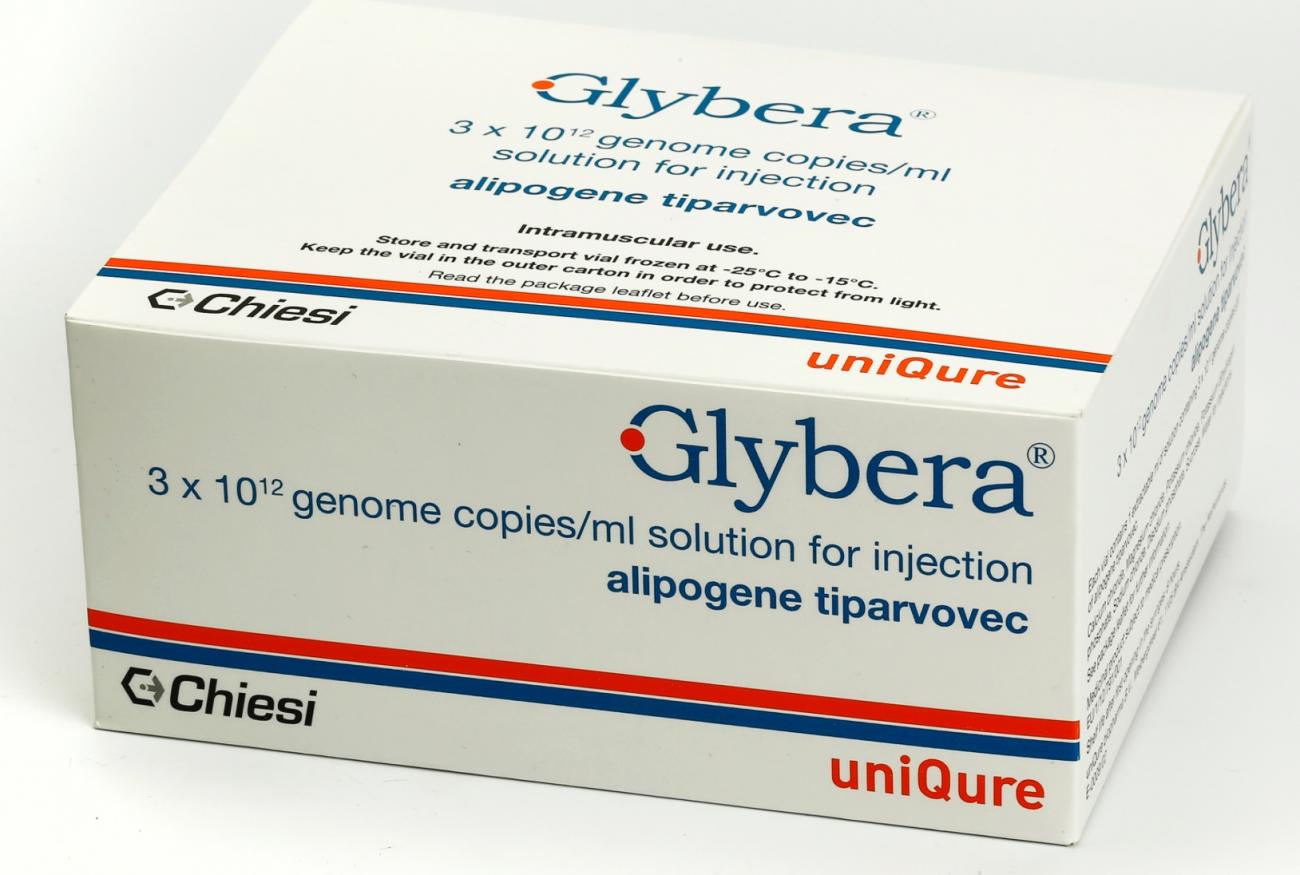
Glybera, the treatment for an ultra-rare disease called lipoprotein lipase deficiency approved back in 2012 in Europe, carries a price tag of $1 million.

GSK has said it won’t price its med anywhere close to $1 million. "We're trying to create a balance between nurturing innovation and creating value for the healthcare system,” spokeswoman Fiona McMillan told FiercePharma last month. “I know there are concerns about Europe's first gene therapy approval [Glybera] costing around $1 million, but I can say that Strimvelis will be significantly less than that.”
Glybera, the treatment for an ultra-rare disease called lipoprotein lipase deficiency approved back in 2012 in Europe, carries a price tag of $1 million.
GSK has said it won’t price its med anywhere close to $1 million. "We're trying to create a balance between nurturing innovation and creating value for the healthcare system,” spokeswoman Fiona McMillan told FiercePharma last month. “I know there are concerns about Europe's first gene therapy approval [Glybera] costing around $1 million, but I can say that Strimvelis will be significantly less than that.”


Thursday, May 12, 2016
Responsible implementation of expanded carrier screening
Lidewij Henneman, Pascal Borry, Davit Chokoshvili, Martina C Cornel, Carla G van El, Francesca Forzano, Alison Hall, Heidi C Howard, Sandra Janssens, Hülya Kayserili, Phillis Lakeman, Anneke Lucassen, Sylvia A Metcalfe, Lovro Vidmar, Guido de Wert, Wybo J Dondorp and Borut Peterlin on behalf of the European Society of Human Genetics (ESHG), European Journal of Human Genetics (2016) 24, e1–e12; doi:10.1038/ejhg.2015.271; published online 16 March 2016
OPEN ACCESS
It is estimated that there are more than 1300 recessively inherited disorders (autosomal and X-linked), whose symptoms range from the very mild to severe, cumulatively affecting at least 30 in every 10000 children. This means that approximately 1–2 in 100 couples are couples who are at risk of having a child affected with a recessive genetic condition. Only a minority of carrier couples will be identified, since the majority of affected children are born to couples with no previous known family history, and only a minority of relatives in high-risk families request carrier testing.
OPEN ACCESS
It is estimated that there are more than 1300 recessively inherited disorders (autosomal and X-linked), whose symptoms range from the very mild to severe, cumulatively affecting at least 30 in every 10000 children. This means that approximately 1–2 in 100 couples are couples who are at risk of having a child affected with a recessive genetic condition. Only a minority of carrier couples will be identified, since the majority of affected children are born to couples with no previous known family history, and only a minority of relatives in high-risk families request carrier testing.
Wednesday, May 11, 2016
Advances in management of movement disorders in children
Anne Koy, Jean-Pierre Lin, Terence D Sanger, Warren A Marks, Jonathan W Mink, Lars Timmermann, The Lancet Neurology, Volume 15, Issue 7, June 2016, Pages 719-735, ISSN 1474-4422, doi:10.1016/S1474-4422(16)00132-0
Movement disorders in children are causally and clinically heterogeneous and present in a challenging developmental context. Treatment options are broad ranging, from pharmacotherapy to invasive neuromodulation and experimental gene and stem cell therapies.It is vital to transfer the expanding knowledge of the movement disorders into the development of novel symptomatic or, ideally, disease-modifying treatments, and to assess these therapeutic strategies in appropriately designed and well done trials.
Movement disorders in children are causally and clinically heterogeneous and present in a challenging developmental context. Treatment options are broad ranging, from pharmacotherapy to invasive neuromodulation and experimental gene and stem cell therapies.It is vital to transfer the expanding knowledge of the movement disorders into the development of novel symptomatic or, ideally, disease-modifying treatments, and to assess these therapeutic strategies in appropriately designed and well done trials.
Tuesday, May 10, 2016
Iron chelation in the treatment of neurodegenerative diseases.
Dusek P, Schneider SA, Aaseth J. J Trace Elem Med Biol. 2016 Mar 24. pii: S0946-672X(16)30047-5. doi: 10.1016/j.jtemb.2016.03.010.
Several studies examining effect of chelation therapy in Friedreich’s ataxia have been conducted. Higher doses of deferiprone seem to worsen neurologic symptoms in FRDA; lower doses might be beneficial in younger patients with less severe disease. However, more evidence is needed.
Several studies examining effect of chelation therapy in Friedreich’s ataxia have been conducted. Higher doses of deferiprone seem to worsen neurologic symptoms in FRDA; lower doses might be beneficial in younger patients with less severe disease. However, more evidence is needed.
Monday, May 9, 2016
Translation of Human-Induced Pluripotent Stem Cells: From Clinical Trial in a Dish to Precision Medicine
Nazish Sayed, Chun Liu, Joseph C. Wu, Journal of the American College of Cardiology, Volume 67, Issue 18, 10 May 2016, Pages 2161-2176, ISSN 0735-1097, doi:10.1016/j.jacc.2016.01.083.
Human-induced pluripotent stem cells (iPSCs) provide a new source of therapeutic cells free from the ethical issues or immune barriers of human embryonic stem cells. iPSC technology has expanded with 3 major applications: disease modeling, regenerative therapy, and drug discovery. Here we discuss, in a comprehensive manner, the recent advances in iPSC technology in relation to basic, clinical, and population health.
Human-induced pluripotent stem cells (iPSCs) provide a new source of therapeutic cells free from the ethical issues or immune barriers of human embryonic stem cells. iPSC technology has expanded with 3 major applications: disease modeling, regenerative therapy, and drug discovery. Here we discuss, in a comprehensive manner, the recent advances in iPSC technology in relation to basic, clinical, and population health.
Saturday, May 7, 2016
Constrictive Pericarditis Versus Restrictive Cardiomyopathy?
Mario J. Garcia, Journal of the American College of Cardiology, Volume 67, Issue 17, 3 May 2016, Pages 2061-2076, ISSN 0735-1097, doi:10.1016/j.jacc.2016.01.076.
Friedreich’s ataxia is an autosomal recessive neurodegenerative disorder. Ventricular arrhythmias and SCD are common. Early in the course of the disease, ECG and echocardiographic findings resemble those of hypertrophic cardiomyopathy, including symmetric LV hypertrophy, abnormal myocardial relaxation, and LV outflow obstruction. Over time, the restrictive phenotype evolves into a dilated phenotype. There is no specific treatment for this condition other than standard HF drugs. Implantable cardioverter-defibrillators are used for prevention of SCD, but a survival benefit has not been demonstrated.
Friedreich’s ataxia is an autosomal recessive neurodegenerative disorder. Ventricular arrhythmias and SCD are common. Early in the course of the disease, ECG and echocardiographic findings resemble those of hypertrophic cardiomyopathy, including symmetric LV hypertrophy, abnormal myocardial relaxation, and LV outflow obstruction. Over time, the restrictive phenotype evolves into a dilated phenotype. There is no specific treatment for this condition other than standard HF drugs. Implantable cardioverter-defibrillators are used for prevention of SCD, but a survival benefit has not been demonstrated.
Friday, May 6, 2016
Horizon Pharma plc Completes Target Enrollment of 90 Patients for Phase 3 Trial of ACTIMMUNE(R) (interferon gamma-1b) for the Treatment of People With Friedreich's Ataxia
DUBLIN, IRELAND -- (Marketwired) -- 05/05/16 -- Horizon Pharma plc today announced that it has completed target enrollment of its Phase 3 study evaluating ACTIMMUNE (interferon gamma-1b) for the treatment of people with Friedreich's ataxia (FA). The study (NCT02415127) has reached its target enrollment of 90 patients at four sites in the United States, and top-line results are expected by the end of 2016.
The Safety, Tolerability and Efficacy of ACTIMMUNE Dose Escalation in Friedreich's Ataxia study ("STEADFAST") is a randomized, multi-center, double-blind, placebo-controlled study with patients randomized 1:1 to receive subcutaneous doses of either ACTIMMUNE or placebo three times a week for a total of 26 weeks. After completion of the study, patients who participated in STEADFAST will have the opportunity to transition to an open-label extension study (NCT02593773).
The Safety, Tolerability and Efficacy of ACTIMMUNE Dose Escalation in Friedreich's Ataxia study ("STEADFAST") is a randomized, multi-center, double-blind, placebo-controlled study with patients randomized 1:1 to receive subcutaneous doses of either ACTIMMUNE or placebo three times a week for a total of 26 weeks. After completion of the study, patients who participated in STEADFAST will have the opportunity to transition to an open-label extension study (NCT02593773).
Thursday, May 5, 2016
Patent Granted for RNA Transcription Technology
Science & Enterprise, By Alan, on May 3rd, 2016.
3 May 2016. A technology that blocks RNA molecules from activating chemicals in the body suppressing the working of genes to treat or prevent disease received a U.S. patent. The technology was licensed to RaNA Therapeutics in Cambridge, Massachusetts, co-founded by lead inventor Jeannie Lee, a professor of genetics and pathology at Mass. General and Harvard Medical School.
The first therapies under development are treatments for the rare central nervous system disorders spinal muscular atrophy and Friedreich’s ataxia, both programs are still in preclinical stages.
3 May 2016. A technology that blocks RNA molecules from activating chemicals in the body suppressing the working of genes to treat or prevent disease received a U.S. patent. The technology was licensed to RaNA Therapeutics in Cambridge, Massachusetts, co-founded by lead inventor Jeannie Lee, a professor of genetics and pathology at Mass. General and Harvard Medical School.
The first therapies under development are treatments for the rare central nervous system disorders spinal muscular atrophy and Friedreich’s ataxia, both programs are still in preclinical stages.
Wednesday, May 4, 2016
Dorsal root ganglia in Friedreich ataxia: satellite cell proliferation and inflammation
Arnulf H. Koeppen, R. Liane Ramirez, Alyssa B. Becker and Joseph E. Mazurkiewicz. Acta Neuropathologica Communications, Neuroscience of Disease 20164:46 DOI: 10.1186/s40478-016-0288-5
We conclude that FA differentially affects the key cellular elements of DRG, and postulate that the disease causes loss of bidirectional trophic support between satellite cells and neurons.
We conclude that FA differentially affects the key cellular elements of DRG, and postulate that the disease causes loss of bidirectional trophic support between satellite cells and neurons.
Subscribe to:
Posts (Atom)

