Shuting Jin, Xiangxiang Zeng, Jiansong Fang, Jiawei Lin, Stephen Y. Chan, Serpil C. Erzurum & Feixiong Cheng; npj Syst Biol Appl 5, 41 (2019) doi:10.1038/s41540-019-0115-2
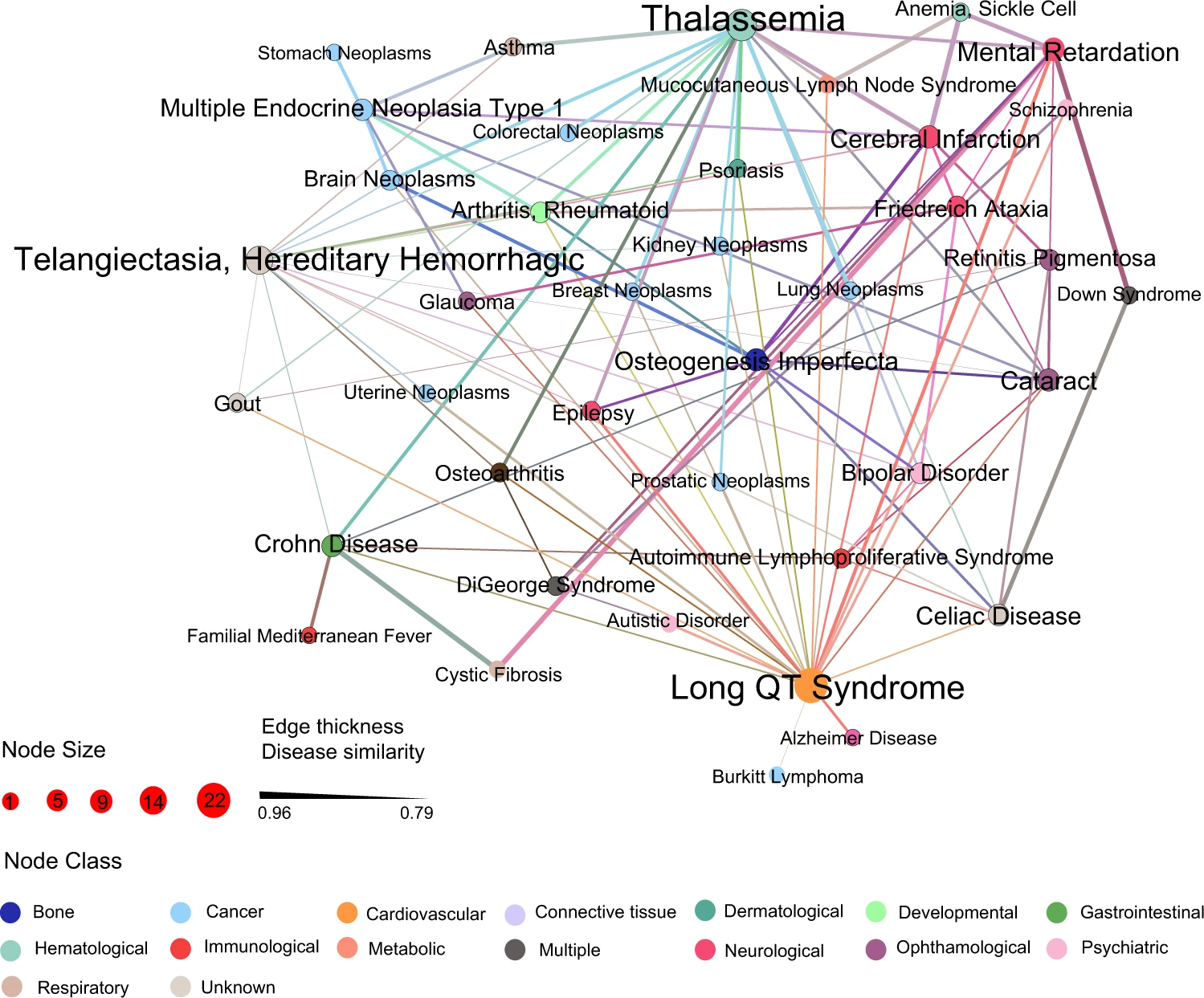
Beyond genetic analysis, shared patterns of gene expression have raised possibilities to inspect disease–disease relationships.6 Alteration and dysregulation of gene expressions are caused by several biological mechanisms, including microRNA (miRNA) dysregulation.
Sunday, December 1, 2019
Saturday, November 30, 2019
International perspectives on the implementation of reproductive carrier screening
Martin B. Delatycki Fowzan Alkuraya Alison Archibald Carlo Castellani Martina Cornel Wayne W. Grody Lidewij Henneman Adonis Ioannides Edwin Kirk Nigel Laing Anneke Lucassen John Massie Juliette Schuurmans Meow‐Keong Thong Irene van Langen Joël Zlotogora (2019). Prenatal Diagnosis. doi:10.1002/pd.5611
The goal of carrier screening is to inform people about their risk of having children with autosomal recessive and X‐linked recessive disorders, to allow for informed decision making about reproductive options. The consequence may be a decrease in the birth prevalence of these conditions, which has occurred in several countries for some conditions.
A national screening programme for the prevention of Friedreich ataxia has been running since 2011. It is offered to individuals of child bearing age who originate from the Paphos district of Cyprus and is based on the high frequency of carriers in this section of the population which is estimated to be about 1 in 11. Referrals are made by primary care doctors or obstetricians and testing is for the common GAA repeat expansion in intron 1 of the FXN gene.
The goal of carrier screening is to inform people about their risk of having children with autosomal recessive and X‐linked recessive disorders, to allow for informed decision making about reproductive options. The consequence may be a decrease in the birth prevalence of these conditions, which has occurred in several countries for some conditions.
A national screening programme for the prevention of Friedreich ataxia has been running since 2011. It is offered to individuals of child bearing age who originate from the Paphos district of Cyprus and is based on the high frequency of carriers in this section of the population which is estimated to be about 1 in 11. Referrals are made by primary care doctors or obstetricians and testing is for the common GAA repeat expansion in intron 1 of the FXN gene.
Friday, November 29, 2019
Possible Mechanisms of Biological Effects Observed in Living Systems during 2H/1H Isotope Fractionation and Deuterium Interactions with Other Biogenic Isotopes
Basov, A.; Fedulova, L.; Vasilevskaya, E.; Dzhimak, S. ; Molecules 2019, 24, 4101. doi:10.3390/molecules24224101
Data on the efficacy and metabolic pathways of the therapy also considered 2H-modified drinking and diet for some diseases, such as Alzheimer’s disease, Friedreich’s ataxia, mitochondrial disorders, diabetes, cerebral hypoxia, Parkinson’s disease, and brain cancer.
The effect of isotope exchange on catalytic complexes in some organelles (mitochondria, peroxisome, and lysosome) can change the intensity of metabolic processes at the cellular level as well as substantially modify the resistance or response of biological tissue.
Friedreich’s ataxia was treated by deuterated linoleic and α-linolenic acids, which resulted in rescue of oxidative-stress-challenged cells by decreasing lipid peroxidation, and also deuterated ethyl linoleate (RT001), which recovered mitochondrial function.
Data on the efficacy and metabolic pathways of the therapy also considered 2H-modified drinking and diet for some diseases, such as Alzheimer’s disease, Friedreich’s ataxia, mitochondrial disorders, diabetes, cerebral hypoxia, Parkinson’s disease, and brain cancer.
The effect of isotope exchange on catalytic complexes in some organelles (mitochondria, peroxisome, and lysosome) can change the intensity of metabolic processes at the cellular level as well as substantially modify the resistance or response of biological tissue.
Friedreich’s ataxia was treated by deuterated linoleic and α-linolenic acids, which resulted in rescue of oxidative-stress-challenged cells by decreasing lipid peroxidation, and also deuterated ethyl linoleate (RT001), which recovered mitochondrial function.
Thursday, November 28, 2019
The ying and yang of idebenone: Not too little, not too much – cell death in NQO1 deficient cells and the mouse retina
C. Varricchio, K. Beirne, C. Heard, B. Newland, M. Rozanowska, A. Brancale, M. Votruba, Free Radical Biology and Medicine, 2019, doi:10.1016/j.freeradbiomed.2019.11.030.
Beneficial effects of idebenone are dependent on the expression of NQO1 in cells. There appears to be a patient-specific response to idebenone with high variability in therapeutic outcomes. A recent study suggested that the cytosolic enzyme NAD(P)H: quinone acceptor oxidoreductase (NQO1) is the major enzyme involved in the activation of idebenone, and the beneficial effects of idebenone are dependent on the expression of NQO1. Here, we confirm the NQO1-dependent activity of idebenone, but we also show, for the first time, that the cytotoxicity of idebenone is linked to cellular expression of NQO1. Upon idebenone administration, cells deficient in NQO1 show a marked decrease in viability in comparison to NQO1 expressing cells, with idebenone causing ROS production and deleterious effects on ATP levels and cell viability. The specific dependence of idebenone activity on NQO1 may also explain the variation in patient outcomes in clinical trials.
Wednesday, November 27, 2019
Single Ascending Dose Study of CTI-1601 Versus Placebo in Subjects With Friedreich's Ataxia
ClinicalTrials.gov Identifier: NCT04176991. Chondrial Therapeutics, Inc., November 26, 2019
Phase 1, A Phase 1 Single Ascending Dose Study to Assess the Safety, Tolerability, Pharmacokinetics, and Pharmacodynamics of Subcutaneous CTI-1601 Versus Placebo in Subjects With Friedreich's Ataxia.
CTI-1601 is a recombinant fusion protein and is intended to deliver human frataxin, the protein deficient in Friedreich's ataxia
Phase 1, A Phase 1 Single Ascending Dose Study to Assess the Safety, Tolerability, Pharmacokinetics, and Pharmacodynamics of Subcutaneous CTI-1601 Versus Placebo in Subjects With Friedreich's Ataxia.
CTI-1601 is a recombinant fusion protein and is intended to deliver human frataxin, the protein deficient in Friedreich's ataxia
Monday, November 25, 2019
Mitochondrial dysfunction in neurons in Friedreich's ataxia
Anna Stepanova, Jordi Magrané, Molecular and Cellular Neuroscience, 2019, 103419, doi:10.1016/j.mcn.2019.103419.
Friedreich's ataxia is a multisystemic genetic disorder within the family of mitochondrial diseases that is characterized by reduced levels of the essential mitochondrial protein frataxin. Based on clinical evidence, the peripheral nervous system is affected early, neuronal dysfunction progresses towards the central nervous system, and other organs (such as heart and pancreas) are affected later. However, little attention has been given to the specific aspects of mitochondria function altered by frataxin depletion in the nervous system. For years, commonly accepted views on mitochondria dysfunction in Friedreich's ataxia stemmed from studies using non-neuronal systems and may not apply to neurons, which have their own bioenergetic needs and present a unique, extensive neurite network. Moreover, the basis of the selective neuronal vulnerability, which primarily affects large sensory neurons in the dorsal root ganglia, large principal neurons in the dentate nuclei of the cerebellum, and pyramidal neurons in the cerebral cortex, remains elusive. In order to identify potential misbeliefs in the field and highlight controversies, we reviewed current knowledge on frataxin expression in different tissues, discussed the molecular function of frataxin, and the consequences of its deficiency for mitochondria structural and functional properties, with a focus on the nervous system.
Saturday, November 23, 2019
Mitochondria Regulation in Ferroptosis
Hai Wang, Can Liu, Yongxin Zhao, Ge Gao, European Journal of Cell Biology, 2019, doi:10.1016/j.ejcb.2019.151058.
Ferroptosis is recognized as a new form of regulated cell death which is initiated by severe lipid peroxidation relying on reactive oxygen species (ROS) generation and iron overload. Targeted induction of ferroptosis was also considered as a potential therapeutic strategy to some oxidative stress diseases, including neurodegenerative disorders, ischemia-reperfusion injury, traumatic spinal cord injury. However, the pertinence between mitochondria and ferroptosis is still in dispute. Here we systematic elucidate the morphological characteristics and metabolic regulation of mitochondria in the regulation of ferroptosis.
Friday, November 22, 2019
TAK-831 for Friedreich Ataxia. Withdrawn from the Union Register of orphan medicinal products in November 2019
20/11/2019. European Medicines Agency.
On 1 April 2019, orphan designation (EU/3/19/2148) was granted by the European Commission to Takeda Pharma A/S, Denmark, for 4-hydroxy-6-{2-[4-(trifluoromethyl)phenyl]ethyl}pyridazin-3(2H)-one (also known as TAK-831) for the treatment of Friedreich’s ataxia.
Please note that this product was withdrawn from the Union Register of orphan medicinal products in November 2019 on request of the Sponsor.
Key facts
Active substance: 4-hydroxy-6-{2-[4-(trifluoromethyl)phenyl]ethyl}pyridazin-3(2H)-one
Disease / condition: Treatment of Friedreich’s ataxia
Date of first decision: 01/04/2019
Outcome: Withdrawn
EU designation number: EU/3/19/2148
On 1 April 2019, orphan designation (EU/3/19/2148) was granted by the European Commission to Takeda Pharma A/S, Denmark, for 4-hydroxy-6-{2-[4-(trifluoromethyl)phenyl]ethyl}pyridazin-3(2H)-one (also known as TAK-831) for the treatment of Friedreich’s ataxia.
Please note that this product was withdrawn from the Union Register of orphan medicinal products in November 2019 on request of the Sponsor.
Key facts
Active substance: 4-hydroxy-6-{2-[4-(trifluoromethyl)phenyl]ethyl}pyridazin-3(2H)-one
Disease / condition: Treatment of Friedreich’s ataxia
Date of first decision: 01/04/2019
Outcome: Withdrawn
EU designation number: EU/3/19/2148
N-terminomics/TAILS profiling of macrophages after chemical inhibition of legumain
Bethany M AndersonLuiz G. N. de AlmeidaHenna SekhonDaniel YoungAntoine DufourLaura Edgington-Mitchell; Biochemistry 2019, XXXX, XXX, XXX-XXX, Publication Date: November 14, 2019 doi:10.1021/acs.biochem.9b00821
We confirmed that frataxin, a mitochondrial protein associated with the formation of iron-sulfur clusters, can be cleaved by legumain. This further asserts a potential contribution of legumain to mitochondrial function and iron metabolism.
Thursday, November 21, 2019
Analysis of Friedreich's ataxia patient clinical data reveals importance of accurate GAA repeat determination in disease prognosis and gender differences in cardiac measures
Mohammadmersad Ghorbani, Françoise Pousset, Allan Tucker, Stephen Swift, Paola Giunti, Michael Parkinson, David Gilbert, XiaoHui Liu, Annette Payne, Informatics in Medicine Unlocked, 2019, doi:10.1016/j.imu.2019.100266.
This work uses computer aided classification techniques to identify which measures of the disease progression, including accurate determination of the shortest allele repeat length, are the most informative when trying to predict likely disease progression and prognosis. Further we investigate the possibility of a gender difference in the progression of the disease. Our results highlight the importance of accurate determination GAA repeat length in any clinical predictions showing that the number of repeats is the best prognostic tool in FRDA and is strongly linked to the age at onset disease. Further that there are possible gender dependent differences in cardiac measurements recorded from patients of similar age of onset and GAA repeat length.
Subscribe to:
Posts (Atom)

